

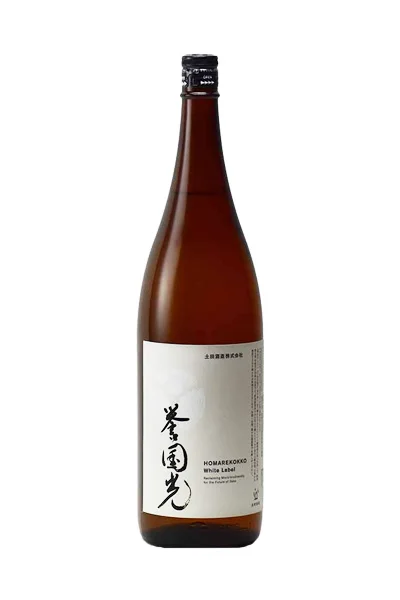
Homare Kokko Shiro Label Kimoto
誉国光 白ラベル 生もとJunmai, rice polished to 90%, kimoto starter
Homare Kokko — Tsuchida Shuzo, Gunma
Loved for 110 years, shared at local tables in Tone-Numata. A rich, umami-filled local sake that makes every meal more enjoyable.
Specifications
- Type
- Junmai Shu
- Rice
- Not disclosed
- Rice polishing ratio
- 90%10% of each grain polished away
- Yeast
- Kyokai No. 701
- Alcohol
- 15%
How to read these
- Type
- The grade printed on the label. It depends on the ingredients (rice only, or with a little distilled alcohol) and on how far the rice is polished. More
- Rice
- The rice variety. Most premium sake uses varieties grown for brewing, such as Yamada Nishiki. More
- Rice polishing ratio
- How much of each grain is left after polishing. A lower number means more was milled away, which usually gives a lighter, more aromatic sake. More
- Yeast
- The yeast strain, which shapes the aroma. More
- Alcohol
- Alcohol by volume. Most sake is 15–16%; undiluted (genshu) sake is often 17–18%. More
Flavor profile Rich & umami
Rich & umami — rice-driven umami and a fuller body. Known in Japan as jun-shu (醇酒).
The kimoto method and descriptions of rich umami point to a full, savory sake with restrained aroma. The 90% polishing ratio and 15% alcohol suggest a moderately heavy body with mild sweetness.
Estimated by AI from the published specifications and the brewery's description; your impression may differ.
About
Uses the Edo-period kimoto (traditional yeast-starter method) brewing technique. Founded in 1907 (Meiji 40). Homarekokko is a local sake from the Tone-Numata area in northern Gunma Prefecture. Because it has been loved by the local community, Homarekokko continues to evolve so that this local sake can be passed on to future generations. Keeping the same quality year after year is also a fine tradition, but we believe it is the fate of local sake breweries like ours to keep changing and survive by being accepted in each era. We have received these words from a local resident: “I can't drink much sake, but I support Homarekokko. It was the sake my beloved grandfather drank every night. He said he worked hard every night in order to live and drink it. He kept it in a prime spot on the shelf and proudly poured it for guests who came to visit. If Homarekokko disappeared, it would mean denying my grandfather's life. So please keep going.” We came to think, “This is what local sake is.” Preserving it for the next generation through positive change. A junmai sake brewed with Gunma-grown rice that is barely milled away. It uses the Edo-period kimoto brewing method. To keep this local sake, which has been loved by local people, passed on to the next generation, we have chosen to change.