

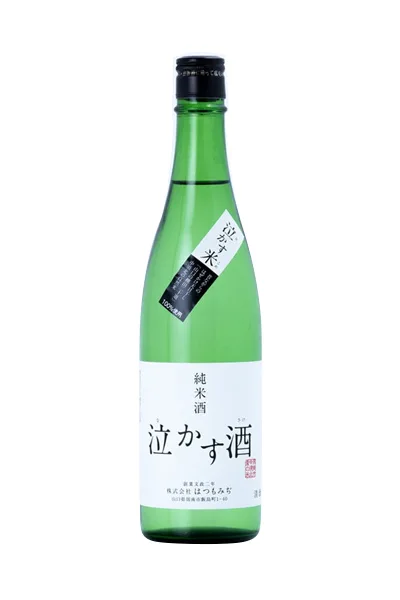
Nakasusake Junmai
純米酒 泣かす酒Junmai, rice polished to 65%
Nakasusake — Hatsumomidi, Yamaguchi
Brewed from Nakasu Kome rice, Nakasusake is a clean, crisp junmai sake that draws out the full umami of the rice.
Specifications
- Type
- Junmai Shu
- Rice
- Not disclosed
- Rice polishing ratio
- 65%35% of each grain polished away
- Yeast
- Not disclosed
- Alcohol
- 16%
How to read these
- Type
- The grade printed on the label. It depends on the ingredients (rice only, or with a little distilled alcohol) and on how far the rice is polished. More
- Rice
- The rice variety. Most premium sake uses varieties grown for brewing, such as Yamada Nishiki. More
- Rice polishing ratio
- How much of each grain is left after polishing. A lower number means more was milled away, which usually gives a lighter, more aromatic sake. More
- Yeast
- The yeast strain, which shapes the aroma. More
- Alcohol
- Alcohol by volume. Most sake is 15–16%; undiluted (genshu) sake is often 17–18%. More
Flavor profile Rich & umami
Rich & umami — rice-driven umami and a fuller body. Known in Japan as jun-shu (醇酒).
As a junmai at 65% polishing, with a description of a clean profile that draws out rice umami, the sake reads as restrained in aroma with a moderately full, savory body. Sweetness is moderate and richness sits slightly above the midpoint.
Estimated by AI from the published specifications and the brewery's description; your impression may differ.
About
The terraced rice paddies of Nakasu district in Shunan, Yamaguchi Prefecture, received the Minister of Agriculture, Forestry and Fisheries Prize at the Bi no Sato Zukuri Contest (Beautiful Village Making Contest). The paddies spread along the hillside, and their scenery is as beautiful as the traditional Japanese landscape itself. Nakasu Kome rice is grown in these beautiful terraced paddies. It is Koshihikari, grown without any agricultural chemicals and dried using traditional methods such as hazekake (drying on racks) and tenhoshi (sun-drying). Limited to 900 bottles.