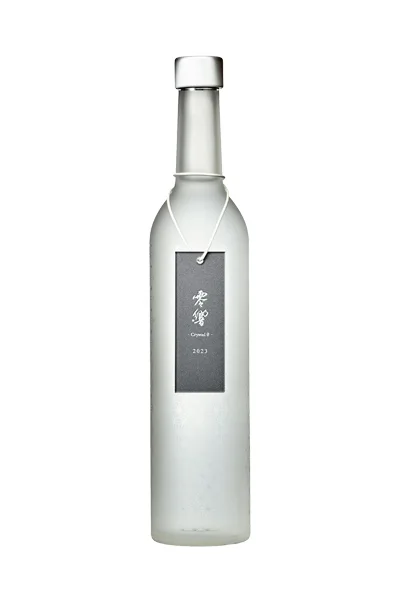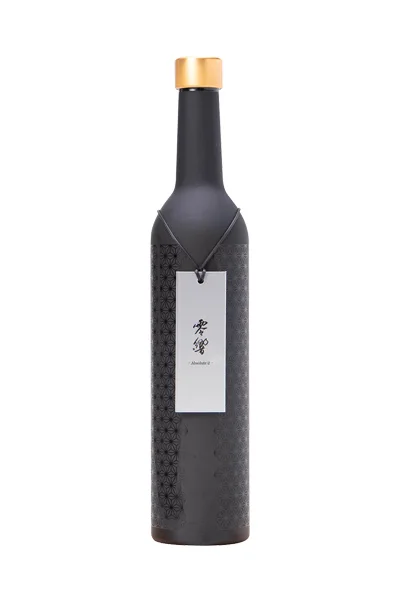
Reikyo -Absolute 0-
零響 -Absolute 0-Junmai daiginjo, Kura no Hana rice
Reikyo — Niizawa Jozoten, Miyagi
A one-of-a-kind sake that pushes the limits of brewing with the world's highest rice polishing ratio.
Specifications
- Type
- Junmai Daiginjo
- Rice
- Kura no Hana
- Rice polishing ratio
- 1%99% of each grain polished away
- Yeast
- Not disclosed
- Alcohol
- 16%
- Sake meter value
- +5dry
- Acidity
- 1.4
How to read these
- Type
- The grade printed on the label. It depends on the ingredients (rice only, or with a little distilled alcohol) and on how far the rice is polished. More
- Rice
- The rice variety. Most premium sake uses varieties grown for brewing, such as Yamada Nishiki. More
- Rice polishing ratio
- How much of each grain is left after polishing. A lower number means more was milled away, which usually gives a lighter, more aromatic sake. More
- Yeast
- The yeast strain, which shapes the aroma. More
- Alcohol
- Alcohol by volume. Most sake is 15–16%; undiluted (genshu) sake is often 17–18%. More
- Sake meter value
- A sweet-to-dry scale. Plus is drier, minus is sweeter. Acidity changes how it tastes, so treat it as a rough guide. More
- Acidity
- Total acid. Higher tends to taste fuller and drier; lower tastes lighter and sweeter. More
Flavor profile Aromatic & light
Aromatic & light — fruity, floral aroma with a light body. Known in Japan as kun-shu (薫酒).
A 1% polished junmai daiginjo points to a high, fruity aroma. SMV +5, acidity 1.4 and 16% alcohol suggest a light, clean body with restrained sweetness.
Estimated by AI from the published specifications and the brewery's description; your impression may differ.
About
In 2018, after a total of 5,297 hours of polishing, we were able to achieve a rice polishing ratio of 0.85%. (99.15% of each grain of rice was milled away, and the sake was brewed using only the remaining 0.85% at its core.) Under the Liquor Tax Act* in effect at the time, polishing ratios on labels were truncated at the decimal point, so this product became the first sake in Japan to be labeled with a rice polishing ratio of 0%. On July 1, 2019, the Liquor Tax Act was revised so that polishing ratios below 1% must be labeled as 'under 1%.' Until that revision took effect, this was the only product labeled with a rice polishing ratio of 0%. Inside the vermilion gift box is a box made with kumiko (traditional Japanese latticework) craftsmanship by Tosa Kumiko. Each box is handmade one by one by craftsmen, and it is a special-order item of which at most three can be made in a single day. 333 bottles each are available for Japan, Asia, and Europe and the Americas, so only 999 bottles are distributed worldwide. Each of these rare bottles is one to savor on a special occasion. * Liquor Tax Act: Article 86-6, 'Standards for Liquor Labeling,' of the Liquor Tax Act and related liquor administration interpretive notices. [Awards] - Feminalise World Wine Competition 2024, Sake category [Coup de Coeur Judges' Special Award], Reikyo 2023 -Absolute 0- - Feminalise World Wine Competition 2024, Junmai Daiginjo category [Gold Medal], Reikyo 2023 -Absolute 0- - Singapore Sake Challenge 2023 [Gold Medal], Reikyo -Absolute 0- 2022 - Oriental Sake Awards 2023 Regional Awards [The Best of Miyagi] - Oriental Sake Awards 2023, Junmai Daiginjo/Junmai Ginjo (Tanrei) category [Gold Medal], Reikyo -Absolute0- 2022 - U.S. National Sake Appraisal 2023, Daiginjo A category [Silver Medal], Reikyo -Absolute0- 2022 - Kura Master 2023 [Gold Medal] - International Wine Challenge 2023 [Gold Medal] [Trophy Award] - MILANO SAKE CHALLENGE 2022, Best Design category [Best Design Award] - Kura Master 2022, Junmai Daiginjo category [Platinum Award] - International Wine Challenge 2022, Junmai Daiginjo category [Gold Medal]
Other sake from this brand 1
- Reikyo -Crystal 0-零響 -Crystal 0-