

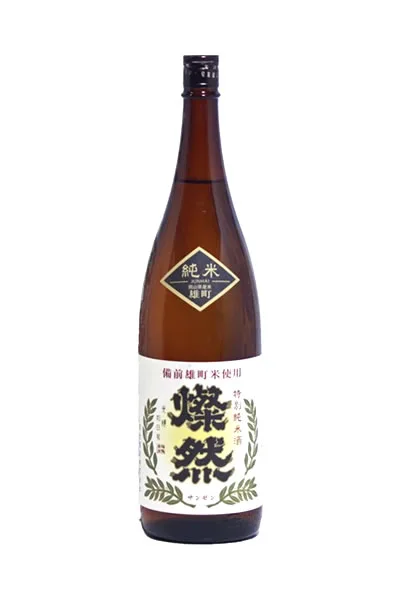
Sanzen Tokubetsu Junmai Omachi
燦然 特別純米 雄町Tokubetsu junmai, Omachi rice polished to 65%
Sanzen — Kikuchi Shuzo, Okayama
A junmai sake that draws out the layered umami of Omachi rice and stays easy to keep drinking.
Specifications
- Type
- Tokubetsu Junmai
- Rice
- Omachi
- Rice polishing ratio
- 65%35% of each grain polished away
- Yeast
- Kyokai No. 901
- Alcohol
- 15–16%
- Sake meter value
- +2slightly dry
How to read these
- Type
- The grade printed on the label. It depends on the ingredients (rice only, or with a little distilled alcohol) and on how far the rice is polished. More
- Rice
- The rice variety. Most premium sake uses varieties grown for brewing, such as Yamada Nishiki. More
- Rice polishing ratio
- How much of each grain is left after polishing. A lower number means more was milled away, which usually gives a lighter, more aromatic sake. More
- Yeast
- The yeast strain, which shapes the aroma. More
- Alcohol
- Alcohol by volume. Most sake is 15–16%; undiluted (genshu) sake is often 17–18%. More
- Sake meter value
- A sweet-to-dry scale. Plus is drier, minus is sweeter. Acidity changes how it tastes, so treat it as a rough guide. More
Flavor profile Rich & umami
Rich & umami — rice-driven umami and a fuller body. Known in Japan as jun-shu (醇酒).
The description's broad umami and mellow texture, together with 65% polishing and SMV +2 in a special junmai, point to restrained aroma, a full rich body and moderate dryness.
Estimated by AI from the published specifications and the brewery's description; your impression may differ.
About
The name Sanzen (燦然), meaning brilliant or radiant, was chosen with the wish that this sake would shine even more brightly among the many sakes available. Made with water from the Takahashi River basin, known for its excellent water quality, and with Omachi, the sake rice that Okayama is proud of nationwide, this junmai sake is characterized by a broad, mellow umami. It pairs exceptionally well with food and can be enjoyed across a wide range of temperatures, from chilled to lukewarm (nurukan). Awards The Fine SAKE Award, Japan 2020 Gold Medal Milano Sake Challenge 2019 Gold Medal, among others.