

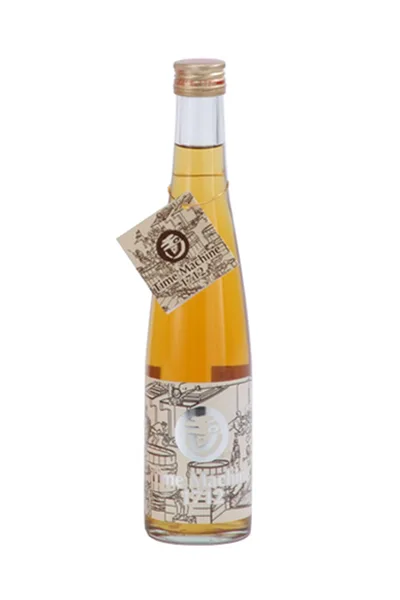
Time Machine 1712
Time Machine 1712Junmai, rice polished to 88%
Time Machine — The Kinoshita Brewery, Kyoto
A mysterious sake that pairs with ice cream and with hesoko
Specifications
- Type
- Junmai Shu
- Rice
- Not disclosed
- Rice polishing ratio
- 88%12% of each grain polished away
- Yeast
- Not disclosed
- Alcohol
- 11–11.9%
How to read these
- Type
- The grade printed on the label. It depends on the ingredients (rice only, or with a little distilled alcohol) and on how far the rice is polished. More
- Rice
- The rice variety. Most premium sake uses varieties grown for brewing, such as Yamada Nishiki. More
- Rice polishing ratio
- How much of each grain is left after polishing. A lower number means more was milled away, which usually gives a lighter, more aromatic sake. More
- Yeast
- The yeast strain, which shapes the aroma. More
- Alcohol
- Alcohol by volume. Most sake is 15–16%; undiluted (genshu) sake is often 17–18%. More
Flavor profile Rich & umami
Rich & umami — rice-driven umami and a fuller body. Known in Japan as jun-shu (醇酒).
The text describes a very sweet (超甘口) junmai with about three times the acidity and five to seven times the amino acids of ginjo styles, pointing to a rich, umami-driven body and restrained aroma. Its sweetness is balanced by acidity and finishes cleanly, which places it in the jun quadrant.
Estimated by AI from the published specifications and the brewery's description; your impression may differ.
About
A sake made using production methods from the Edo period. Despite being extremely sweet, its thick sweetness clears cleanly without lingering, thanks to the 'magic' of three times the acidity and five to seven times the amino acid level compared with ginjo-type sake. A sake-version dessert wine that is ideal as an aperitif. Poured over ice cream, it is so good it makes you laugh. Yet it also pairs surprisingly well with blue cheese, foie gras, and hesoko (mackerel pickled in rice bran, a specialty of the Tango region). The label of Taimumashin 1712 depicts an Edo-period sake brewery scene, in which a robot whose face bears the Tamagawa logo is hidden among the kurabito (brewery workers).
Other sake from this brand 1
- Time Machine 88Time Machine 88