

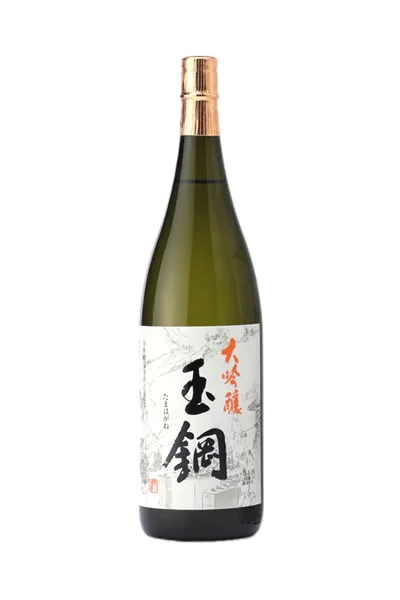
Tamahagane Daiginjo
玉鋼 大吟醸Daiginjo, Yamada Nishiki rice polished to 35%
Tamahagane — Hikami Sake Brewery General Partnership, Shimane
The strength and sharpness of a Japanese sword
Specifications
- Type
- Daiginjo
- Rice
- Yamada Nishiki
- Rice polishing ratio
- 35%65% of each grain polished away
- Yeast
- Kyokai No. 1801
- Alcohol
- 16%
- Sake meter value
- +4dry
How to read these
- Type
- The grade printed on the label. It depends on the ingredients (rice only, or with a little distilled alcohol) and on how far the rice is polished. More
- Rice
- The rice variety. Most premium sake uses varieties grown for brewing, such as Yamada Nishiki. More
- Rice polishing ratio
- How much of each grain is left after polishing. A lower number means more was milled away, which usually gives a lighter, more aromatic sake. More
- Yeast
- The yeast strain, which shapes the aroma. More
- Alcohol
- Alcohol by volume. Most sake is 15–16%; undiluted (genshu) sake is often 17–18%. More
- Sake meter value
- A sweet-to-dry scale. Plus is drier, minus is sweeter. Acidity changes how it tastes, so treat it as a rough guide. More
Flavor profile Full & complex
Full & complex — aromatic and full-bodied, including aged sake. Known in Japan as juku-shu (熟酒).
A 35% polished daiginjo with SMV +4 and the description of moderate dryness points to low sweetness. The emphasis on bold power, umami and crisp finish suggests a full-bodied, savory profile with restrained aroma.
Estimated by AI from the published specifications and the brewery's description; your impression may differ.
About
"Tamahagane" takes its name from tamahagane, the steel used to make Japanese swords, which is produced locally in only one place in Japan. Made with Yamada Nishiki rice from Hyogo Prefecture and brewed slowly and carefully by hand, this daiginjo lives up to its name. It has a bold, powerful character and a pleasant dryness, and it offers both umami and a clean finish (kire).