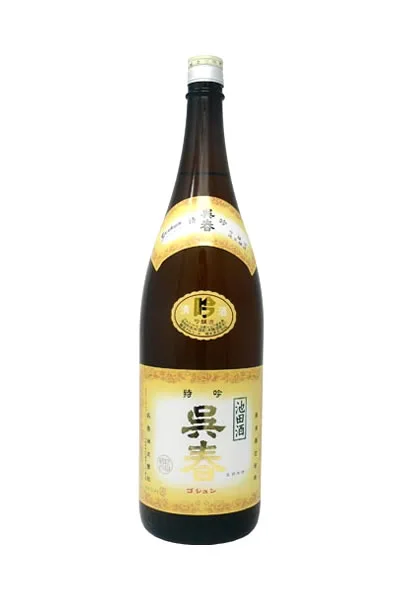
Goshun Tokugin
呉春 特吟Ginjo, rice polished to 50%
Hard to find even in Osaka, the 'Kitchen of the Nation'
Specifications
- Type
- Ginjo
- Rice
- Not disclosed
- Rice polishing ratio
- 50%50% of each grain polished away
- Yeast
- Kyokai No. 9
- Alcohol
- 16–17%
- Sake meter value
- -1medium
- Acidity
- 1.3
How to read these
- Type
- The grade printed on the label. It depends on the ingredients (rice only, or with a little distilled alcohol) and on how far the rice is polished. More
- Rice
- The rice variety. Most premium sake uses varieties grown for brewing, such as Yamada Nishiki. More
- Rice polishing ratio
- How much of each grain is left after polishing. A lower number means more was milled away, which usually gives a lighter, more aromatic sake. More
- Yeast
- The yeast strain, which shapes the aroma. More
- Alcohol
- Alcohol by volume. Most sake is 15–16%; undiluted (genshu) sake is often 17–18%. More
- Sake meter value
- A sweet-to-dry scale. Plus is drier, minus is sweeter. Acidity changes how it tastes, so treat it as a rough guide. More
- Acidity
- Total acid. Higher tends to taste fuller and drier; lower tastes lighter and sweeter. More
Flavor profile Aromatic & light
Aromatic & light — fruity, floral aroma with a light body. Known in Japan as kun-shu (薫酒).
The ginjo grade, 50% polishing and low-temperature fermentation point to a fragrant profile, while SMV -1 and low acidity of 1.3 give a softer, slightly sweet impression. Omachi rice and low-temperature aging add modest richness within an overall light frame.
Estimated by AI from the published specifications and the brewery's description; your impression may differ.
About
Goshun Tokugin is a special brand from Goshun, carefully brewed by fermenting at low temperature with Akaiwa Omachi, a sake rice often called the 'phantom' sake rice. It is normally a ginjo sake that is pasteurized twice (火入れ). After the new sake is pressed, it is pasteurized once and then aged at low temperature in tanks for a set period. It is pasteurized again at bottling before being released from the brewery. Even in Osaka, known as the 'Kitchen of the Nation,' this rare sake is in short supply.
Other sake from this brand 2
- Goshun Honmaru呉春 本丸
- Goshun Ikeda Sake呉春 池田酒