

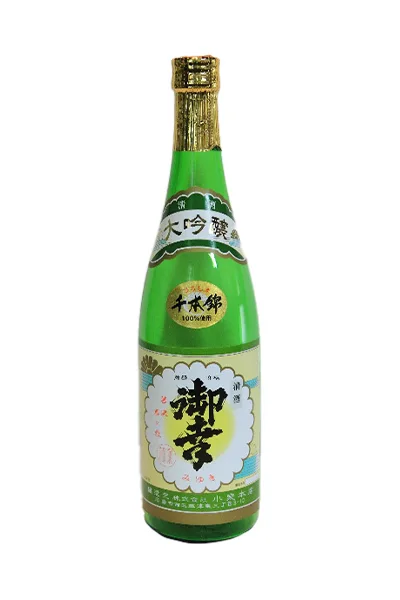
Miyuki Tezukuri Daiginjo
御幸 手造り 大吟醸Daiginjo, rice polished to 40%, handmade (tezukuri), undiluted (genshu), drip-pressed from hanging bags (shizuku)
Miyuki — Koizumi Honten, Hiroshima
A daiginjo made from Hiroshima-grown Senbon Nishiki sake rice polished to 40 percent, with the rice hand-washed in the deep cold of February.
Specifications
- Type
- Daiginjo
- Rice
- Not disclosed
- Rice polishing ratio
- 40%60% of each grain polished away
- Yeast
- Not disclosed
How to read these
- Type
- The grade printed on the label. It depends on the ingredients (rice only, or with a little distilled alcohol) and on how far the rice is polished. More
- Rice
- The rice variety. Most premium sake uses varieties grown for brewing, such as Yamada Nishiki. More
- Rice polishing ratio
- How much of each grain is left after polishing. A lower number means more was milled away, which usually gives a lighter, more aromatic sake. More
- Yeast
- The yeast strain, which shapes the aroma. More
Flavor profile Full & complex
Full & complex — aromatic and full-bodied, including aged sake. Known in Japan as juku-shu (熟酒).
The 40% polishing ratio and daiginjo designation point to a clearly aromatic profile. Genshu bottling from fune-free shizuku pressing adds body and richness while sweetness stays moderate, placing it in the juku quadrant.}
Estimated by AI from the published specifications and the brewery's description; your impression may differ.
About
The moromi was placed in pressing bags, hung up, and allowed to drip through under its own weight, a method called fukuro-tsuri (bag hanging). The sake collected this way was an undiluted sake (genshu) and was bottled immediately.
Other sake from this brand 8
- Miyuki Yukimizake御幸 雪見酒
- Miyuki Tenmoku御幸 天目
- Miyuki Daiginjo御幸 大吟醸 みゆき
- Miyuki Tokusen御幸 特撰
- Miyuki Hiroshima no Sake御幸 広島の酒
- Miyuki Josen御幸 上撰
- Miyuki Enkotobuki Kiku御幸 延寿菊
- Miyuki Sake Kiji御幸 酒生地