

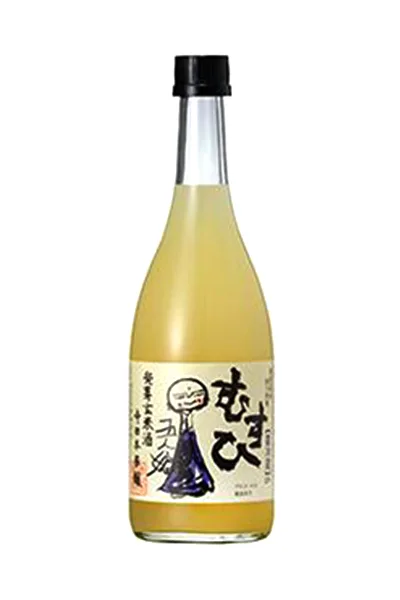
Musubi Hatsuga Genmai Sake
むすひ 発芽玄米酒Koshihikari rice, sprouted brown rice (hatsuga genmai)
Musubi — Terada Honke, Chiba
A sake full of life: sprouted brown rice sake
Specifications
- Type
- Other
- Rice
- Koshihikari
- Yeast
- Mutenka
- Alcohol
- 7–12%
- Sake meter value
- -10–-35very sweet
- Acidity
- 13
How to read these
- Type
- The grade printed on the label. It depends on the ingredients (rice only, or with a little distilled alcohol) and on how far the rice is polished. More
- Rice
- The rice variety. Most premium sake uses varieties grown for brewing, such as Yamada Nishiki. More
- Yeast
- The yeast strain, which shapes the aroma. More
- Alcohol
- Alcohol by volume. Most sake is 15–16%; undiluted (genshu) sake is often 17–18%. More
- Sake meter value
- A sweet-to-dry scale. Plus is drier, minus is sweeter. Acidity changes how it tastes, so treat it as a rough guide. More
- Acidity
- Total acid. Higher tends to taste fuller and drier; lower tastes lighter and sweeter. More
Flavor profile Rich & umami
Rich & umami — rice-driven umami and a fuller body. Known in Japan as jun-shu (醇酒).
Strong lactic acidity and a pickle-like aroma from the unpasteurized fermentation make it restrained in fragrance and full in texture. The acidity of 13 and negative SMV suggest a sweet-sour, rich profile that places it in the jun quadrant.
Estimated by AI from the published specifications and the brewery's description; your impression may differ.
About
Musubi is a sprouted brown rice sake with a very strong sourness from lactic acid bacteria and a distinctive aroma reminiscent of nukazuke (rice-bran pickles). It is quite unlike ordinary sake. The lactic acid bacteria and yeast remain alive in the bottle, and even while refrigerated the sake continues to ferment and mature every day. It is truly a living sake. *Because it is naturally fermented and delivered exactly as it is made, its taste (sweetness, acidity and so on), alcohol content, and effervescence differ each time, depending on the season and each batch. At times the acidity exceeds 15, making it surprisingly sour, while at other times it is remarkably mellow. Depending on the time, it may be fizzing so strongly that it foams out when opened, or the effervescence may have settled completely. The quality, production method, and ingredients remain the same in every state. Please enjoy the flavors of each moment, which are the hallmark of natural fermentation. Note that if pressure has built up inside the bottle, the contents may spurt out if the cap is opened all at once. Open the bottle slowly, loosening and retightening the cap repeatedly over about 5 to 10 minutes to release the pressure gradually.