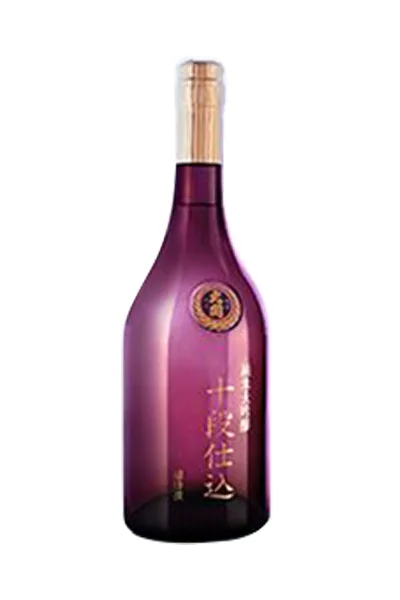
Ozeki Chotokusen Juudan Shikomi
大関 超特撰 十段仕込Junmai daiginjo, rice polished to 40%, ten-stage mash (juudan shikomi)
A premium sweet sake for the grown-up palate
Specifications
- Type
- Junmai Daiginjo
- Rice
- Not disclosed
- Rice polishing ratio
- 40%60% of each grain polished away
- Yeast
- Not disclosed
- Alcohol
- 16%
- Sake meter value
- -30very sweet
- Acidity
- 1.9
How to read these
- Type
- The grade printed on the label. It depends on the ingredients (rice only, or with a little distilled alcohol) and on how far the rice is polished. More
- Rice
- The rice variety. Most premium sake uses varieties grown for brewing, such as Yamada Nishiki. More
- Rice polishing ratio
- How much of each grain is left after polishing. A lower number means more was milled away, which usually gives a lighter, more aromatic sake. More
- Yeast
- The yeast strain, which shapes the aroma. More
- Alcohol
- Alcohol by volume. Most sake is 15–16%; undiluted (genshu) sake is often 17–18%. More
- Sake meter value
- A sweet-to-dry scale. Plus is drier, minus is sweeter. Acidity changes how it tastes, so treat it as a rough guide. More
- Acidity
- Total acid. Higher tends to taste fuller and drier; lower tastes lighter and sweeter. More
Flavor profile Full & complex
RestrainedAromatic
RichLight
Full & complex — aromatic and full-bodied, including aged sake. Known in Japan as juku-shu (熟酒).
The SMV of -30 and the description of honey-like, thick richness and sweetness point to a very sweet, dense profile. The 40% polished junmai daiginjo's fragrant, rich character places it in the juku quadrant.
Estimated by AI from the published specifications and the brewery's description; your impression may differ.
About
Made with 100% Yamada Nishiki, Japan's top sake rice. The aroma is refined and rich, and the palate is thick and smooth, like honey, with deep body and sweetness.
Other sake from this brand 7
- Ozeki Josen Kinkan大関 上撰 金冠
- Ozeki Tokusen Honjozo Kinkan大関 特撰 本醸造 金冠
- Ozeki Junmai Daiginjo大関 純米大吟醸 Junmai Daiginjo
- Ozeki Ginkan大関 銀冠
- Ozeki Daiginjo大関 大吟醸 Daiginjo
- Ozeki Kasen Kinkan大関 佳撰 金冠
- Ozeki Josen Kara Tamba大関 上撰 辛丹波