

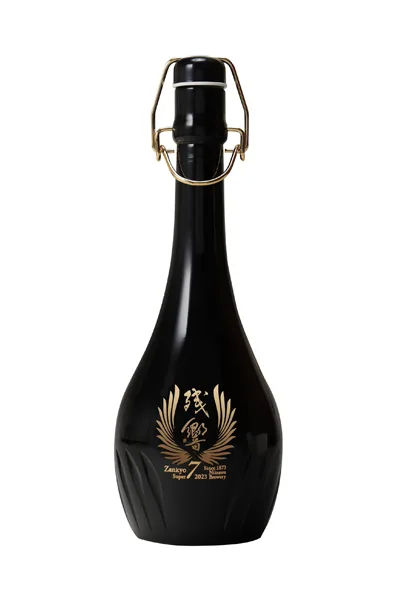
Chotokusen Junmai Daiginjo Zankyo Super7
超特選 純米大吟醸 残響 Super7Junmai daiginjo, Kura no Hana rice polished to 7%
Zankyo — Niizawa Jozoten, Miyagi
A bottle whose almost unmatched clarity of character creates a sense of transparency.
Specifications
- Type
- Junmai Daiginjo
- Rice
- Kura no Hana
- Rice polishing ratio
- 7%93% of each grain polished away
- Yeast
- Not disclosed
- Alcohol
- 16%
- Sake meter value
- +0medium
- Acidity
- 1.5
How to read these
- Type
- The grade printed on the label. It depends on the ingredients (rice only, or with a little distilled alcohol) and on how far the rice is polished. More
- Rice
- The rice variety. Most premium sake uses varieties grown for brewing, such as Yamada Nishiki. More
- Rice polishing ratio
- How much of each grain is left after polishing. A lower number means more was milled away, which usually gives a lighter, more aromatic sake. More
- Yeast
- The yeast strain, which shapes the aroma. More
- Alcohol
- Alcohol by volume. Most sake is 15–16%; undiluted (genshu) sake is often 17–18%. More
- Sake meter value
- A sweet-to-dry scale. Plus is drier, minus is sweeter. Acidity changes how it tastes, so treat it as a rough guide. More
- Acidity
- Total acid. Higher tends to taste fuller and drier; lower tastes lighter and sweeter. More
Flavor profile Clean & dry
Clean & dry — restrained aroma, crisp and refreshing. Known in Japan as so-shu (爽酒).
A 7% polishing ratio, SMV of 0 and acidity of 1.5 point to a clear, clean profile, and the text says yeast-derived ginjo aroma is deliberately suppressed to highlight the rice core. Aroma is restrained, body is light to medium, and sweetness is moderate.
Estimated by AI from the published specifications and the brewery's description; your impression may differ.
About
In 2009, Japan's first sake made with a rice polishing ratio in single digits was released. Using a newly installed in-house rice polishing machine, the brewers asked themselves, "How far can the rice be polished?" and "above all, what kind of flavor will it have?" Zankyo was brewed with these questions in mind. The aim was to explore the core flavor of the rice by suppressing the ginjo aroma derived from yeast, a technically driven approach. However, as soon as the sake was completed, other breweries in the industry contacted them asking to taste it. Reasoning that "if it is a sake that even professionals find interesting," they proceeded to commercialize it. The rice polishing ratio, which was 9% at the time, has since been refined from 9% to 8% and then to 7%, reaching its current level. (The design of the outer box changes color every year.) Awards - Feminalise World Wine Competition 2024, Junmai Daiginjo category, Gold Medal: Chotokusen Junmai Daiginjo Zankyo 2023 - Asia Pacific Sake Award 2023, Silver Medal: Chotokusen Junmai Daiginjo Zankyo Super7 2022 - MONACO SAKE AWARD 2023, Mariage Award, Junmai Daiginjo and Daiginjo category, Gold Medal: Chotokusen Junmai Daiginjo Zankyo Super7 2022 - Singapore Sake Challenge 2023, Gold Medal: Chotokusen Junmai Daiginjo Zankyo Super7 2019 - Singapore Sake Challenge 2023, Gold Medal: Chotokusen Junmai Daiginjo Zankyo Super7 2021 - Singapore Sake Challenge 2023, Gold Medal: Chotokusen Junmai Daiginjo Zankyo Super7 2022 - Singapore Sake Challenge 2023, Silver Medal: Chotokusen Junmai Daiginjo Zankyo Super7 2020 - KAN SAKE AWARD 2023, Special Lukewarm (nurukan) category, Gold Medal - Luxembourg Sake Challenge 2022, Bronze Medal - MILANO SAKE CHALLENGE 2022, Tasting Award (kikizake category), Junmai Daiginjo and Daiginjo category, Gold Medal - Spain International Spirits Competition 2022, Gold Medal - International Wine Challenge 2022, Junmai Daiginjo category, Gold Medal - U.S. National Sake Appraisal 2022, Silver Medal