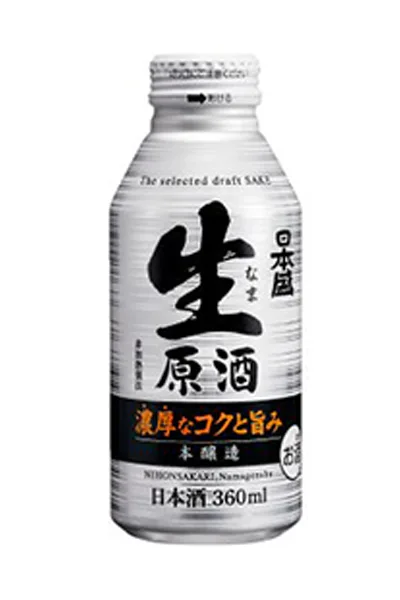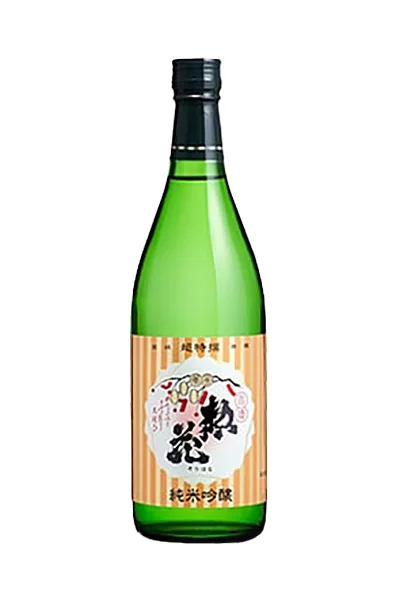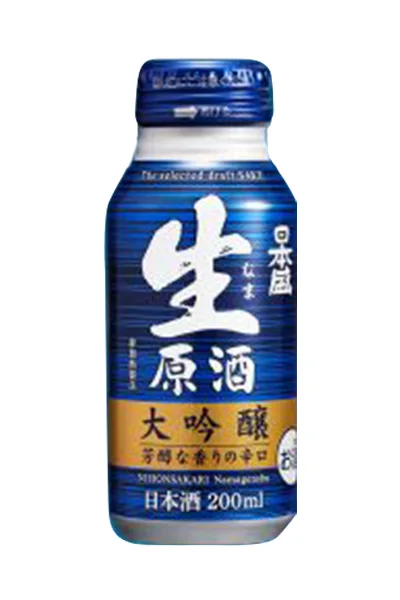
Nihonsakari Nama Genshu Bottle Can Daiginjo
日本盛 生原酒 ボトル缶 大吟醸Daiginjo, unpasteurized (nama), undiluted (genshu)
Nihonsakari — Nihonsakari, Hyogo
Unpasteurized and undiluted, made to be savored fresh, with a luxurious aroma and rich flavor.
Specifications
- Type
- Daiginjo
- Rice
- Not disclosed
- Yeast
- Not disclosed
- Alcohol
- 18–18.9%
- Sake meter value
- +4dry
- Acidity
- 1.5
How to read these
- Type
- The grade printed on the label. It depends on the ingredients (rice only, or with a little distilled alcohol) and on how far the rice is polished. More
- Rice
- The rice variety. Most premium sake uses varieties grown for brewing, such as Yamada Nishiki. More
- Yeast
- The yeast strain, which shapes the aroma. More
- Alcohol
- Alcohol by volume. Most sake is 15–16%; undiluted (genshu) sake is often 17–18%. More
- Sake meter value
- A sweet-to-dry scale. Plus is drier, minus is sweeter. Acidity changes how it tastes, so treat it as a rough guide. More
- Acidity
- Total acid. Higher tends to taste fuller and drier; lower tastes lighter and sweeter. More
Flavor profile Aromatic & light
Aromatic & light — fruity, floral aroma with a light body. Known in Japan as kun-shu (薫酒).
The daiginjo grade and the text's emphasis on floral ginjo aroma point to a high aroma score. The 18% genshu strength adds some weight, while SMV +4 and acidity 1.5 keep it moderately dry and only slightly light-bodied, placing it in the kun quadrant.
Estimated by AI from the published specifications and the brewery's description; your impression may differ.
About
A luxurious, fresh deliciousness and aroma that can be fully enjoyed in an unpasteurized, undiluted sake (nama genshu). A bottle can that makes it easy to enjoy the vivid ginjo aroma of a Daiginjo in everyday moments.
Other sake from this brand 7
- Nihonsakari Nama Genshu Bottle Can Junmai Ginjo日本盛 生原酒 ボトル缶 純米吟醸
- Nihonsakari Josen日本盛 上撰
- Nihonsakari Banshaku日本盛 晩酌
- Nihonsakari Daiginjo日本盛 大吟醸
- Nihonsakari Nama Genshu Bottle Can Honjozo日本盛 生原酒 ボトル缶 本醸造
- Nihonsakari Sō Hana日本盛 惣花
- Nihonsakari Banshaku Ichiban Shibori日本盛 晩酌 一番搾り