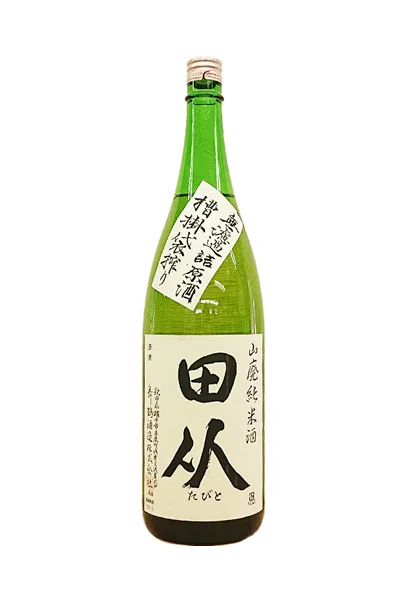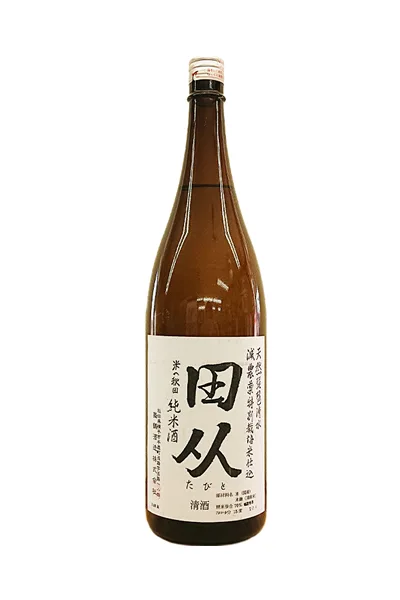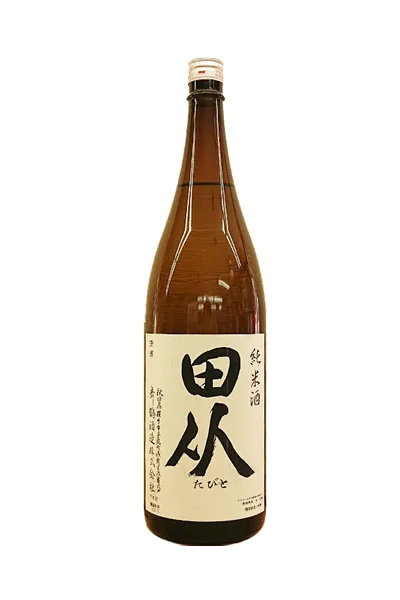
Tabito Junmai sake
田从 純米酒Junmai, rice polished to 70%
Tabito — Maizuru Shuzo, Akita
A gentle aroma, with a subtle sweetness of rice on the palate
Specifications
- Type
- Junmai Shu
- Rice
- Not disclosed
- Rice polishing ratio
- 70%30% of each grain polished away
- Yeast
- Kyokai No. 701
- Alcohol
- 15%
- Sake meter value
- +4.5dry
- Acidity
- 1.7
How to read these
- Type
- The grade printed on the label. It depends on the ingredients (rice only, or with a little distilled alcohol) and on how far the rice is polished. More
- Rice
- The rice variety. Most premium sake uses varieties grown for brewing, such as Yamada Nishiki. More
- Rice polishing ratio
- How much of each grain is left after polishing. A lower number means more was milled away, which usually gives a lighter, more aromatic sake. More
- Yeast
- The yeast strain, which shapes the aroma. More
- Alcohol
- Alcohol by volume. Most sake is 15–16%; undiluted (genshu) sake is often 17–18%. More
- Sake meter value
- A sweet-to-dry scale. Plus is drier, minus is sweeter. Acidity changes how it tastes, so treat it as a rough guide. More
- Acidity
- Total acid. Higher tends to taste fuller and drier; lower tastes lighter and sweeter. More
Flavor profile Rich & umami
Rich & umami — rice-driven umami and a fuller body. Known in Japan as jun-shu (醇酒).
The text describes a gentle aroma and a rice sweetness, with a strong acidity that tightens the body. Acidity of 1.7 and SMV +4.5 support a dry, full-bodied junmai that sits in the jun quadrant.
Estimated by AI from the published specifications and the brewery's description; your impression may differ.
About
A gentle aroma, and a faint sweetness of rice that comes through when taken into the mouth. Following closely behind is the acidity distinctive of Tabito, which surges forward and crisply tightens the whole. This dry junmai sake is suited to drinking with food and can be enjoyed at any temperature, from chilled (hiyashi) to warmed (kan). Its robust character is the appeal of this bottle: even after it has been warmed and allowed to cool, the flavor does not fall apart, and it can be enjoyed to the last drop.
Other sake from this brand 2
- Tabito Yamahai Junmai Muroka Genshu H22BY田从 山廃純米無濾過原酒 H22BY
- Tabito Junmai Tennen Biwashimizu Gennouyaku Tokubetsu Saibaimai Shikomi田从 純米酒 天然琵琶清水 減農薬特別栽培米仕込