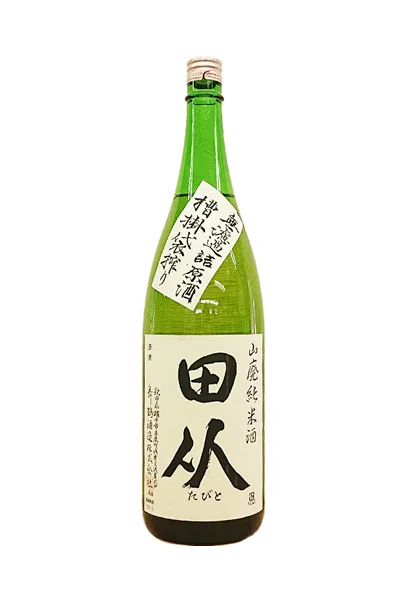
Tabito Yamahai Junmai Muroka Genshu H22BY
田从 山廃純米無濾過原酒 H22BYJunmai, rice polished to 65%, yamahai starter, unfiltered (muroka), undiluted (genshu), 2010 brewing year
Tabito — Maizuru Shuzo, Akita
Rich umami, its edges softened, faintly stirring a dry bite at the back of the throat.
Specifications
- Type
- Junmai Shu
- Rice
- Not disclosed
- Rice polishing ratio
- 65%35% of each grain polished away
- Yeast
- Kyokai No. 901
- Alcohol
- 16%
- Sake meter value
- +4dry
- Acidity
- 2
How to read these
- Type
- The grade printed on the label. It depends on the ingredients (rice only, or with a little distilled alcohol) and on how far the rice is polished. More
- Rice
- The rice variety. Most premium sake uses varieties grown for brewing, such as Yamada Nishiki. More
- Rice polishing ratio
- How much of each grain is left after polishing. A lower number means more was milled away, which usually gives a lighter, more aromatic sake. More
- Yeast
- The yeast strain, which shapes the aroma. More
- Alcohol
- Alcohol by volume. Most sake is 15–16%; undiluted (genshu) sake is often 17–18%. More
- Sake meter value
- A sweet-to-dry scale. Plus is drier, minus is sweeter. Acidity changes how it tastes, so treat it as a rough guide. More
- Acidity
- Total acid. Higher tends to taste fuller and drier; lower tastes lighter and sweeter. More
Flavor profile Rich & umami
Rich & umami — rice-driven umami and a fuller body. Known in Japan as jun-shu (醇酒).
The yamahai genshu with 10+ years of aging, acidity of 2.0 and SMV of +4 points to a rich, full body with pronounced umami and acidity. The aroma is restrained with a faint aged note, and sweetness is moderate, with rice sweetness balanced by the acidity.
Estimated by AI from the published specifications and the brewery's description; your impression may differ.
About
Made with Akita-grown sake rice Akinosei and brewed using the traditional yamahai method (a yeast-starter method), this rare Tabito, from the H22BY brewing year, was slowly aged for more than 10 years. When poured, the golden sake gives off a gentle aroma of maturation. On the palate, the rice's natural sweetness opens up with a rounded softness, followed by a gradually building acidity and a rich, full umami that makes it a truly exceptional bottle. Served on the rocks, the acidity comes forward; warmed (kan), it develops deeper flavor.
Other sake from this brand 2
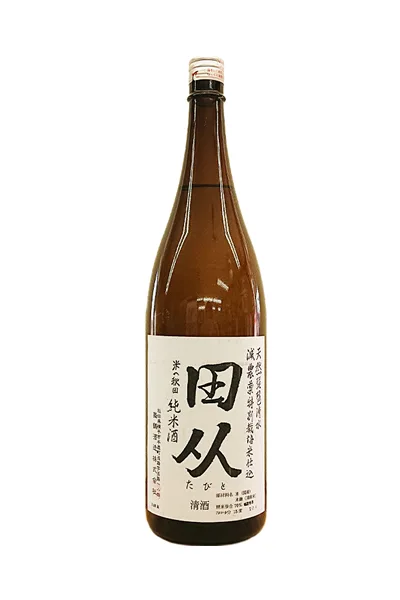
- Tabito Junmai Tennen Biwashimizu Gennouyaku Tokubetsu Saibaimai Shikomi田从 純米酒 天然琵琶清水 減農薬特別栽培米仕込
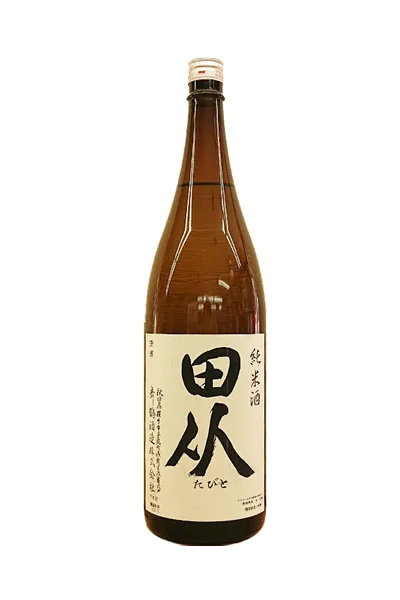
- Tabito Junmai sake田从 純米酒