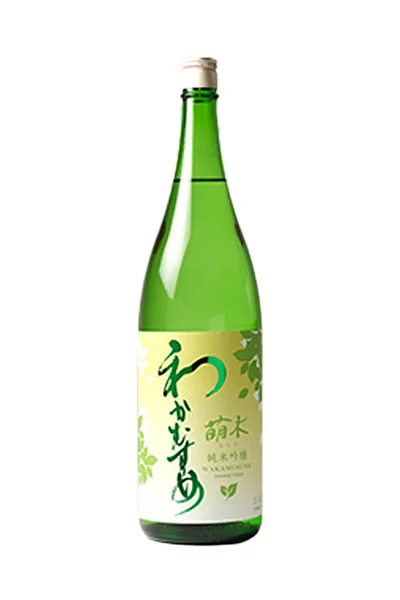
Wakamusume Moegi
わかむすめ 萌木Junmai ginjo, Hattan Nishiki rice polished to 60%
Wakamusume — Araya Shuzo, Yamaguchi
Brewed as a broad-minded ginjo that pairs well with almost any kind of meal, as a companion to food.
Specifications
- Type
- Junmai Ginjo
- Rice
- Hattan Nishiki
- Rice polishing ratio
- 60%40% of each grain polished away
- Yeast
- Not disclosed
How to read these
- Type
- The grade printed on the label. It depends on the ingredients (rice only, or with a little distilled alcohol) and on how far the rice is polished. More
- Rice
- The rice variety. Most premium sake uses varieties grown for brewing, such as Yamada Nishiki. More
- Rice polishing ratio
- How much of each grain is left after polishing. A lower number means more was milled away, which usually gives a lighter, more aromatic sake. More
- Yeast
- The yeast strain, which shapes the aroma. More
Flavor profile Aromatic & light
Aromatic & light — fruity, floral aroma with a light body. Known in Japan as kun-shu (薫酒).
The junmai ginjo label, 60% polishing and the description of a fresh, aromatic nose with a juicy palate point to lifted aroma and a light-to-medium body. The juiciness suggests a gently sweet, moderately rich impression.
Estimated by AI from the published specifications and the brewery's description; your impression may differ.
About
A Junmai Ginjo made with Hattan Nishiki rice polished to 60%. Moegi is the name of a traditional layered color combination (kasane irome) that is considered auspicious, symbolizing the prosperity of a family. Its aroma is refreshing, evoking the fresh breath of new green leaves, and the palate is fresh and juicy. Recommended serving temperature: 15–20°C (slightly chilled to room temperature)
Other sake from this brand 5
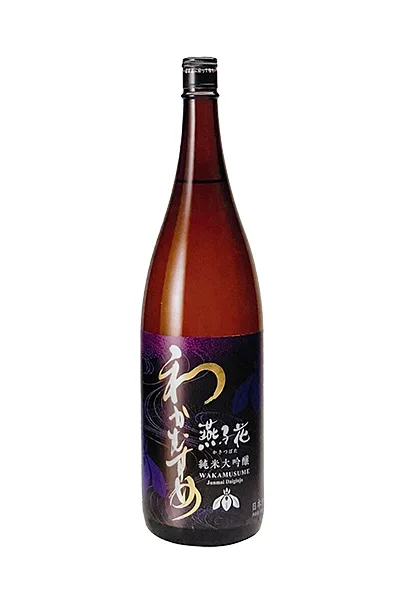
- Wakamusume Kakitsubataわかむすめ 燕子花
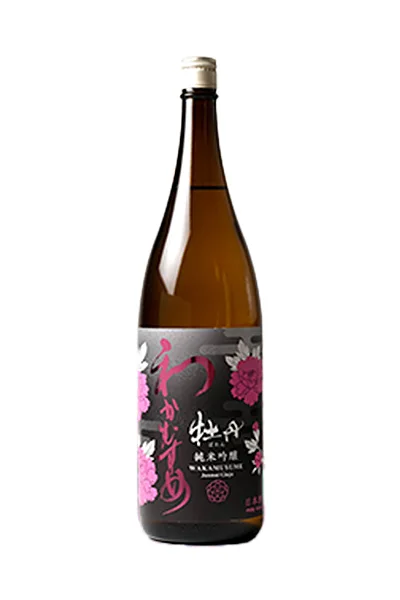
- Wakamusume Botanわかむすめ 牡丹
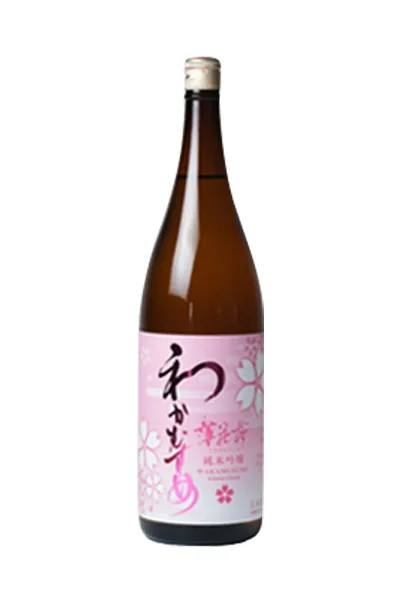
- Wakamusume Usuhanazakuraわかむすめ 薄花桜
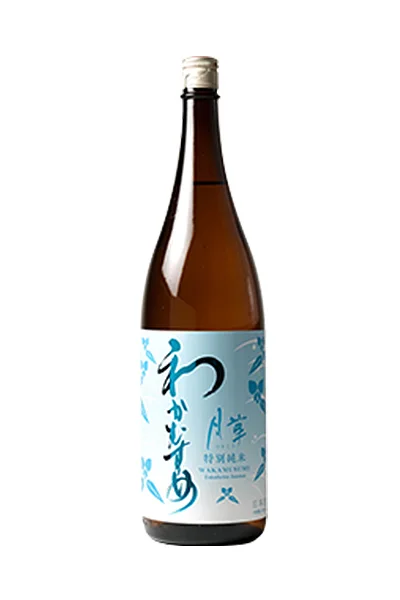
- Wakamusume Tsukikusaわかむすめ 月草
- Wakamusume Ruri Karakusaわかむすめ 瑠璃唐草