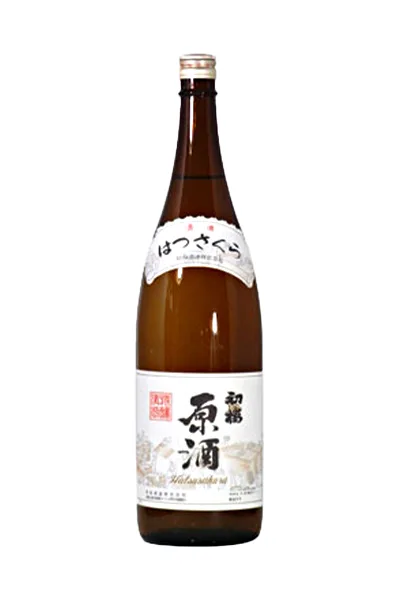
Hatsusakura Josen (Wakayama)
初桜(和歌山県) 上撰Futsushu (table sake), brewery's upper tier (josen)
Hatsusakura — Hatsusakura Shuzo, Wakayama
Hatsusakura Josen, the standard of Kishu Katsuragi Kawakami sake. This is the foundation of Hatsusakura.
Specifications
- Type
- Futsushu
- Rice
- Not disclosed
- Yeast
- Not disclosed
- Alcohol
- 15–16%
- Sake meter value
- -1medium
- Acidity
- 1.6
How to read these
- Type
- The grade printed on the label. It depends on the ingredients (rice only, or with a little distilled alcohol) and on how far the rice is polished. More
- Rice
- The rice variety. Most premium sake uses varieties grown for brewing, such as Yamada Nishiki. More
- Yeast
- The yeast strain, which shapes the aroma. More
- Alcohol
- Alcohol by volume. Most sake is 15–16%; undiluted (genshu) sake is often 17–18%. More
- Sake meter value
- A sweet-to-dry scale. Plus is drier, minus is sweeter. Acidity changes how it tastes, so treat it as a rough guide. More
- Acidity
- Total acid. Higher tends to taste fuller and drier; lower tastes lighter and sweeter. More
Flavor profile Rich & umami
Rich & umami — rice-driven umami and a fuller body. Known in Japan as jun-shu (醇酒).
The futsushu designation, sake meter value of -1 and moderate acidity of 1.6 point to a restrained aroma, a mildly sweet profile and a rounded, slightly full body. The brewery text stresses local rice, water and koji but gives no explicit aroma or body descriptors, so the placement is near the centre-left of the map.
Estimated by AI from the published specifications and the brewery's description; your impression may differ.
About
Hatsusakura sake is a local sake from Kishu Katsuragi, at the foot of Mount Koya (Koyasan) in Wakayama Prefecture. Viewed from Wakayama Castle, the area lies upstream on the Kinokawa River, and for this reason it has long been known locally as Kawakami sake (upstream sake). Hatsusakura Shuzo is the last small sake brewery remaining in this area. We value local rice, water, and koji. While preserving traditional techniques, we also work diligently on developing new products, quality control, and research.
Other sake from this brand 4
- Hatsusakura (Wakayama) Genshu初桜(和歌山県) 原酒
- Hatsusakura (Wakayama) Junmai sake初桜(和歌山県) 純米酒
- Hatsusakura (Wakayama) Tarekuchi初桜(和歌山県) たれくち
- Hatsusakura (Wakayama) Kasen初桜(和歌山県) 佳撰