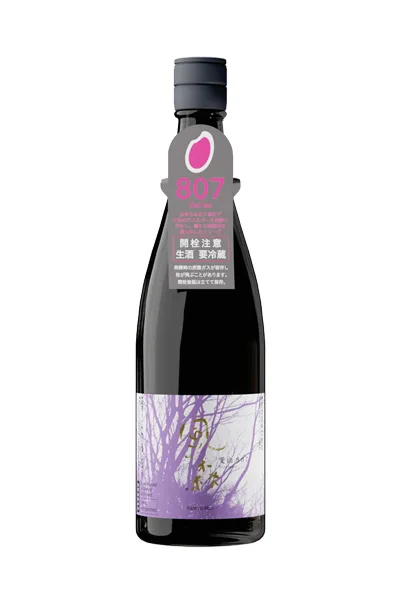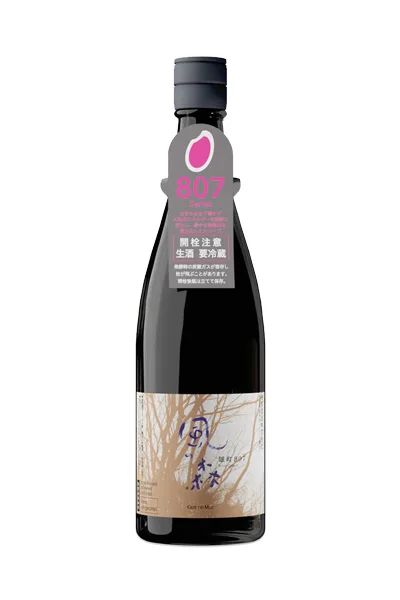
Kaze no Mori Omachi 807
風の森 雄町 807Junmai, Omachi rice polished to 80%, unfiltered, unpasteurized and undiluted (muroka nama genshu)
Kaze no Mori — Yucho Shuzo, Nara
Rich sweetness and acidity in harmonious balance.
Specifications
- Type
- Junmai Shu
- Rice
- Omachi
- Rice polishing ratio
- 80%20% of each grain polished away
- Yeast
- Kyokai No. 7
- Alcohol
- 17%
How to read these
- Type
- The grade printed on the label. It depends on the ingredients (rice only, or with a little distilled alcohol) and on how far the rice is polished. More
- Rice
- The rice variety. Most premium sake uses varieties grown for brewing, such as Yamada Nishiki. More
- Rice polishing ratio
- How much of each grain is left after polishing. A lower number means more was milled away, which usually gives a lighter, more aromatic sake. More
- Yeast
- The yeast strain, which shapes the aroma. More
- Alcohol
- Alcohol by volume. Most sake is 15–16%; undiluted (genshu) sake is often 17–18%. More
Flavor profile Rich & umami
Rich & umami — rice-driven umami and a fuller body. Known in Japan as jun-shu (醇酒).
The 80% polishing, undiluted genshu at 17% and the text's rich sweetness, acidity and complexity point to a full, dense body with noticeable sweetness. Aroma is restrained for a junmai without ginjo character, placing it in the jun (rich, restrained) type.
Estimated by AI from the published specifications and the brewery's description; your impression may differ.
About
Milled to a low polishing ratio, yet through ultra-low-temperature, long-term fermentation, this sake fully draws out the character of Omachi (a sake rice variety). The flavor is complex, a quality of Omachi polished to 80%, which has high solubility. Kazenomori (807 Series) A series in which the rice is not polished heavily and the energy of the land is harnessed in fermentation, maximizing rich complexity.
Other sake from this brand 21
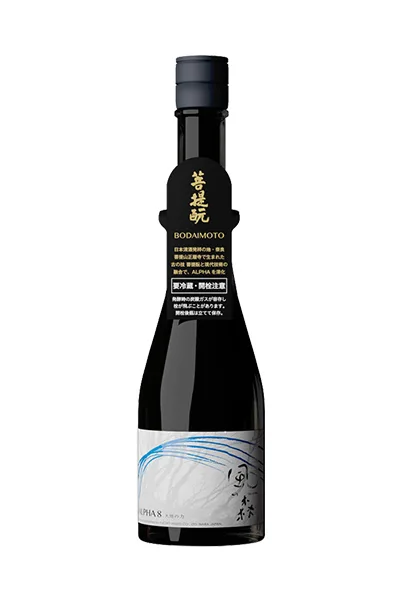
- Kaze no Mori ALPHA 8 "Daichi no Chikara"風の森 ALPHA 8 「大地の力」
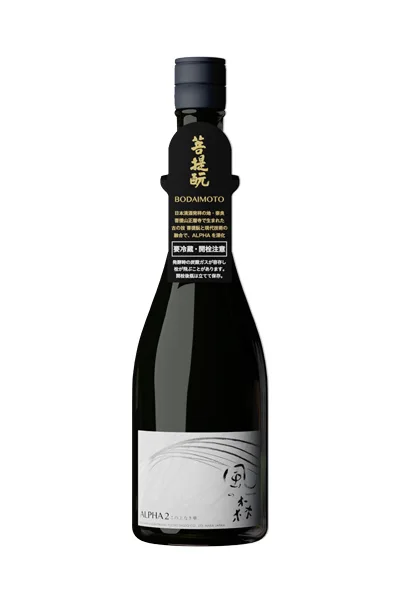
- Kaze no Mori ALPHA 2 "Kono Ue Naki Hana"風の森 ALPHA 2 「この上なき華」
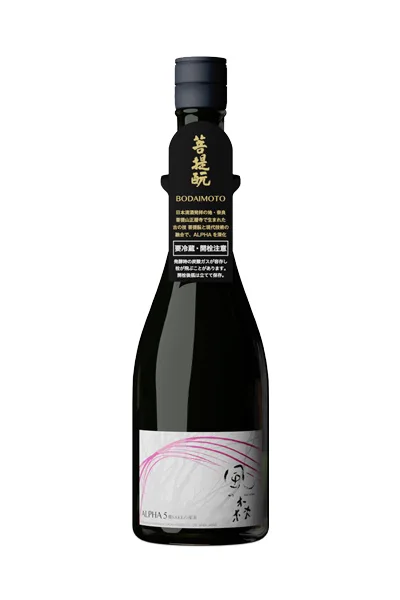
- Kaze no Mori ALPHA 5 "Kan SAKE no Tankyu"風の森 ALPHA 5 「燗 SAKE の探求」
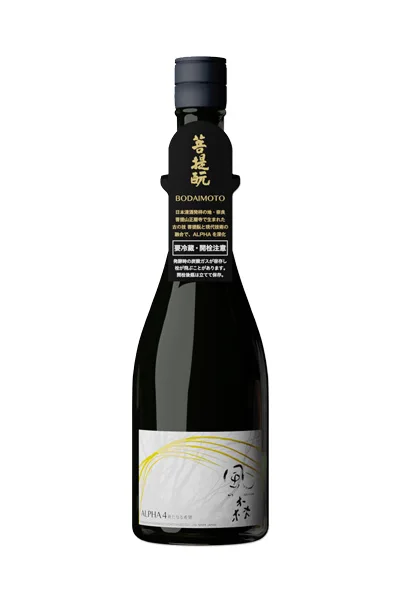
- Kaze no Mori ALPHA 4 "Aratanaru Kibo"風の森 ALPHA 4 「新たなる希望」
- Kaze no Mori ALPHA 6 "Rokugo e no Keii"風の森 ALPHA 6 「6号への敬意」
- Kaze no Mori ALPHA TYPE7 2020風の森 ALPHA TYPE7 2020
- Kaze no Mori ALPHA1 "Jisho e no Tobira"風の森 ALPHA1 「次章への扉」
- Kaze no Mori ALPHA 3 "Sekai e no Kakehashi"風の森 ALPHA 3 「世界への架け橋」
- Kaze no Mori Aiyama 807風の森 愛山 807
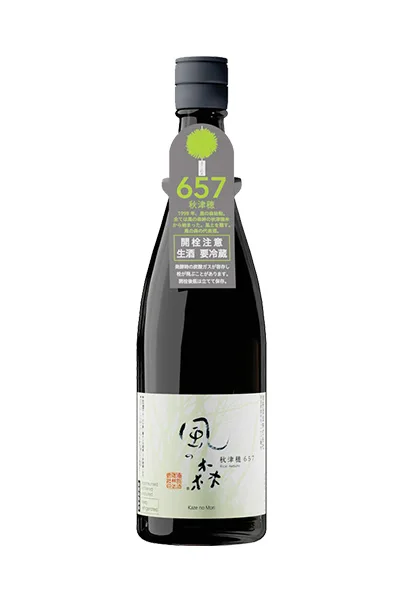
- Kaze no Mori Akitsuho 657風の森 秋津穂 657
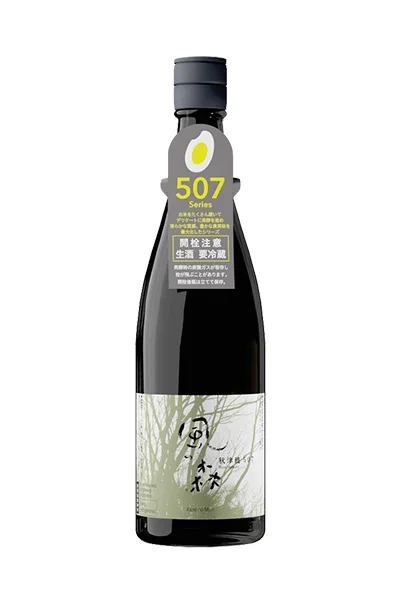
- Kaze no Mori Akitsuho 507風の森 秋津穂 507
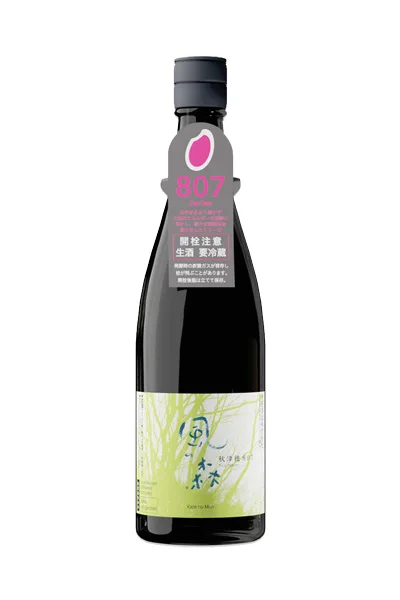
- Kaze no Mori Akitsuho 807風の森 秋津穂 807