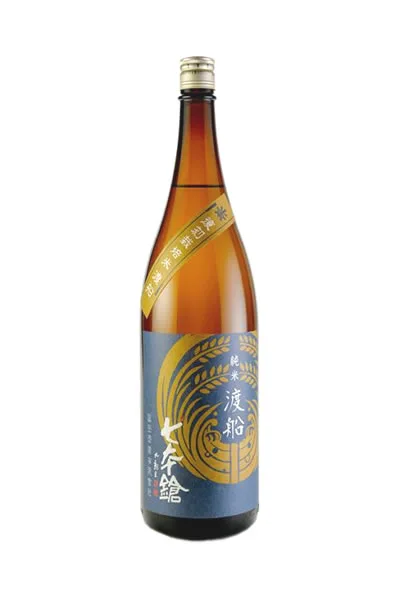
Shichihonyari Junmai Watashibune
七本鎗 純米 渡船Junmai, rice polished to 77%
Shichihonyari — Tomita Shuzo, Shiga
A robust, full-bodied dry food sake made from Shiga Watashibune No. 6, a legendary sake rice
Specifications
- Type
- Junmai Shu
- Rice
- Not disclosed
- Rice polishing ratio
- 77%23% of each grain polished away
- Yeast
- Kyokai No. 9
- Alcohol
- 15%
- Sake meter value
- +4dry
- Acidity
- 2.1
How to read these
- Type
- The grade printed on the label. It depends on the ingredients (rice only, or with a little distilled alcohol) and on how far the rice is polished. More
- Rice
- The rice variety. Most premium sake uses varieties grown for brewing, such as Yamada Nishiki. More
- Rice polishing ratio
- How much of each grain is left after polishing. A lower number means more was milled away, which usually gives a lighter, more aromatic sake. More
- Yeast
- The yeast strain, which shapes the aroma. More
- Alcohol
- Alcohol by volume. Most sake is 15–16%; undiluted (genshu) sake is often 17–18%. More
- Sake meter value
- A sweet-to-dry scale. Plus is drier, minus is sweeter. Acidity changes how it tastes, so treat it as a rough guide. More
- Acidity
- Total acid. Higher tends to taste fuller and drier; lower tastes lighter and sweeter. More
Flavor profile Rich & umami
Rich & umami — rice-driven umami and a fuller body. Known in Japan as jun-shu (醇酒).
The 77% junmai with SMV +4 and acidity 2.1 reads as dry, and the description's powerful, umami-rich character and crisp acidity point to a full body with restrained aroma.
Estimated by AI from the published specifications and the brewery's description; your impression may differ.
About
The sake rice used in this sake, Watashibune, was bred in the Meiji era. Its cultivation proved so difficult that it was lost in the Showa 30s (1955–1964). It was revived from just a small handful of seed rice discovered at the Shiga Prefectural Agricultural Experiment Station, which is why it is considered a legendary sake rice. Because this rice is so precious, we deliberately kept the polishing ratio low to express the umami inherent in the rice as a grain. It has the soft character typical of Watashibune, and despite the low polishing ratio it is not heavy. Its defining feature is a crisp acidity with a clean finish. It is delicious chilled and at room temperature, and we also recommend it warmed (kan).
Other sake from this brand 16
- Shichihonyari Junmai Tamasakae七本鎗 純米 玉栄
- Shichihonyari Junmai Ginjo Nama Genshu七本鎗 純米吟醸 生原酒
- Shichihonyari Tokubetsu Junmai Genshu七本鎗 特別純米 原酒
- Shichihonyari Daiginjo Koshu七本鎗 大吟醸 古酒
- Shichihonyari Daiginjo Tobin-dori七本鎗 大吟醸 斗瓶取り
- Shichihonyari Nigori Binkan Hiire七本鎗 にごり酒 瓶燗火入れ
- Shichihonyari Kasen七本鎗 佳撰
- Shichihonyari Junmai Daiginjo七本鎗 純米大吟醸
- Shichihonyari Daiginjo七本鎗 大吟醸
- Shichihonyari Junmai sake 80% Seimai七本鎗 純米酒 八十%精米
- Shichihonyari Junmai Ginjo七本鎗 純米吟醸
- Shichihonyari Josen七本鎗 上撰