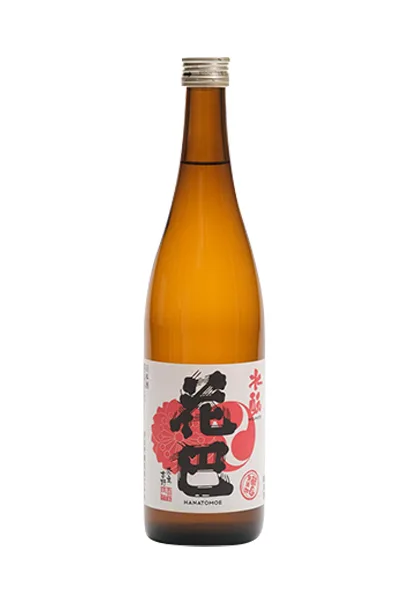
Hanatomoe Mizumoto Junmai sake
花巴 水もと 純米酒Junmai, rice polished to 70%, bodaimoto starter (mizumoto), unfiltered (muroka), unpasteurized (nama), undiluted (genshu)
Hanatomoe — Miyoshino Jozo, Nara
A flavor made possible by brewing in an age when fermentation and brewing are no longer separate
Specifications
- Type
- Junmai Shu
- Rice
- Not disclosed
- Rice polishing ratio
- 70%30% of each grain polished away
- Yeast
- Unknown
- Alcohol
- 16%
- Sake meter value
- -12–-10very sweet
- Acidity
- 3.5
How to read these
- Type
- The grade printed on the label. It depends on the ingredients (rice only, or with a little distilled alcohol) and on how far the rice is polished. More
- Rice
- The rice variety. Most premium sake uses varieties grown for brewing, such as Yamada Nishiki. More
- Rice polishing ratio
- How much of each grain is left after polishing. A lower number means more was milled away, which usually gives a lighter, more aromatic sake. More
- Yeast
- The yeast strain, which shapes the aroma. More
- Alcohol
- Alcohol by volume. Most sake is 15–16%; undiluted (genshu) sake is often 17–18%. More
- Sake meter value
- A sweet-to-dry scale. Plus is drier, minus is sweeter. Acidity changes how it tastes, so treat it as a rough guide. More
- Acidity
- Total acid. Higher tends to taste fuller and drier; lower tastes lighter and sweeter. More
Flavor profile Rich & umami
Rich & umami — rice-driven umami and a fuller body. Known in Japan as jun-shu (醇酒).
The description cites a rich, cheese-like umami and firm structure from mizumoto brewing with little fruitiness, supported by acidity 3.5 and SMV -12 to -10. This points to restrained aroma, full body, and a sweet-leaning impression softened by the acidity.
Estimated by AI from the published specifications and the brewery's description; your impression may differ.
About
Mizumoto (water-starter method), a traditional technique said to have been developed by a monk in the Muromachi period, involves soaking raw rice in water to cultivate lactic acid bacteria. This sake is brewed using that method. Compared with namazake, it is smoother and more mellow, with a calm character and less fruity expression. Brewed with the mizumoto method, it has a rich umami reminiscent of dairy products such as cheese, and a style with a firm, well-defined structure. Hanatomoe was created with the concept of brewing sake in close partnership with local industries in Yoshino. We invite you to try it.
Other sake from this brand 5
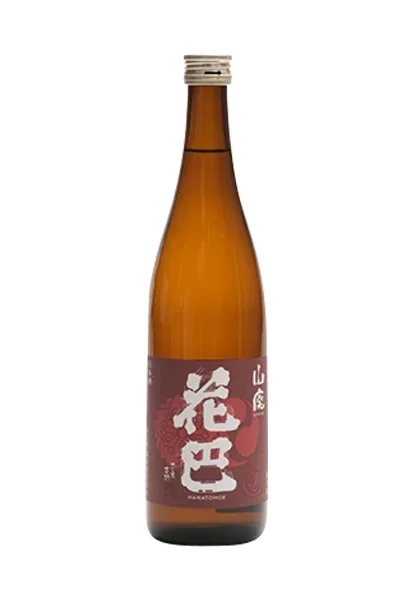
- Hanatomoe Yamahai Junmai sake花巴 山廃 純米酒
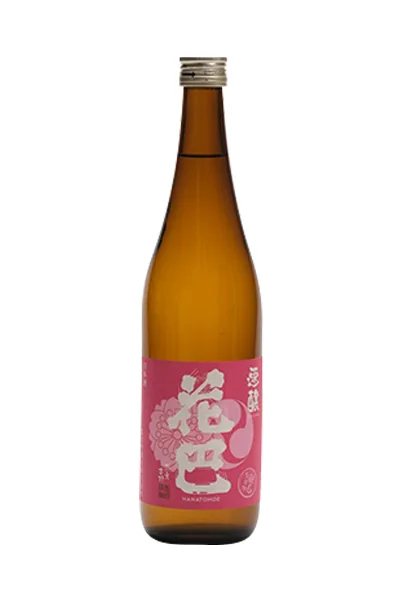
- Hanatomoe Sokujo Junmai sake花巴 速醸 純米酒
- Hanatomoe Yamahai Honjozo花巴 山廃 本醸造
- Hanatomoe Yamahai Junmai Ginjo花巴 山廃 純米吟醸
- Hanatomoe Yamahai Junmai Daiginjo花巴 山廃 純米大吟醸