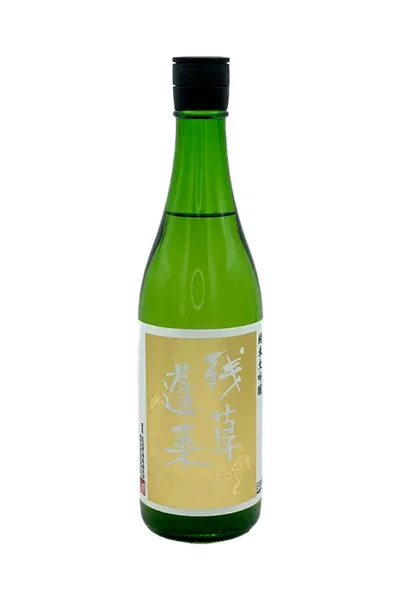
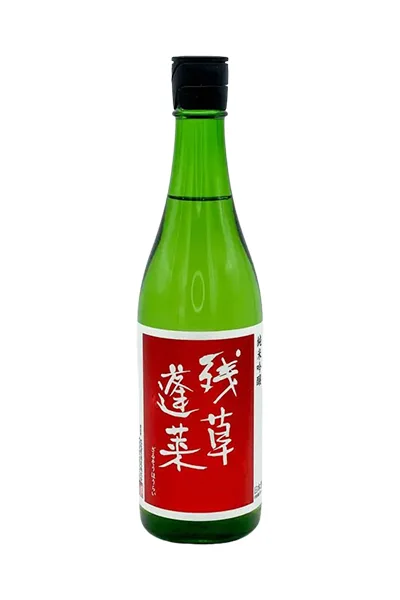
Zarusohorai Shiroku Shiki Tokubetsu Junmai
残草蓬莱 四六式 特別純米Tokubetsu junmai, rice polished to 60%, undiluted (genshu)
Zarusohorai — Oya Takashi Shuzo, Kanagawa
Yon-roku, read as "shiro" (white): a sake brewed with white koji, the mold usually used in shochu, which produces more citric and other acids than the yellow koji used in ordinary sake.
Specifications
- Type
- Junmai Shu
- Rice
- Not disclosed
- Rice polishing ratio
- 60%40% of each grain polished away
- Yeast
- Not disclosed
- Alcohol
- 15%
- Acidity
- 3.4
How to read these
- Type
- The grade printed on the label. It depends on the ingredients (rice only, or with a little distilled alcohol) and on how far the rice is polished. More
- Rice
- The rice variety. Most premium sake uses varieties grown for brewing, such as Yamada Nishiki. More
- Rice polishing ratio
- How much of each grain is left after polishing. A lower number means more was milled away, which usually gives a lighter, more aromatic sake. More
- Yeast
- The yeast strain, which shapes the aroma. More
- Alcohol
- Alcohol by volume. Most sake is 15–16%; undiluted (genshu) sake is often 17–18%. More
- Acidity
- Total acid. Higher tends to taste fuller and drier; lower tastes lighter and sweeter. More
Flavor profile Full & complex
Full & complex — aromatic and full-bodied, including aged sake. Known in Japan as juku-shu (熟酒).
The high acidity of 3.4 from white koji gives a punchy, crisp palate with a green-apple aroma and soft umami, so the body reads as full while aroma is moderate. Sweetness is low because the acid dominates the impression.
Estimated by AI from the published specifications and the brewery's description; your impression may differ.
About
Its acidity, at 3.2, is roughly double the national average for sake, and it has a clearly defined character, with aromas reminiscent of green apple and a firm, structured taste. While the flavor carries a gentle umami, the punchy acidity gives a pleasant feel as it goes down the throat. The sake is bottled with almost no exposure to air, so you can also enjoy the natural carbonation produced during fermentation, which tingles gently on the tip of the tongue.
Other sake from this brand 11
- Zarusohorai Tokubetsu Junmai Gohyakumangoku残草蓬莱 特別純米 五百万石
- Zarusohorai Tokubetsu Junmai Miyama Nishiki 60残草蓬莱 特別純米 美山錦 60
- Zarusohorai Tokubetsu Junmai Shiboritate残草蓬莱 特別純米 しぼり立て
- Zarusohorai Junmai Shiboritate残草蓬莱 純米 しぼり立て
- Zarusohorai Junmai Daiginjo残草蓬莱 純米大吟醸
- Zarusohorai Junmai Ginjo Dewa Sansan 50残草蓬莱 純米吟醸 出羽燦々 50
- Zarusohorai Josen残草蓬莱 上撰
- Zarusohorai Tokubetsu Honjozo残草蓬莱 特別本醸造
- Zarusohorai Junmai Fiibaa 777残草蓬莱 純米 フィーバー 777
- Zarusohorai Junmai Miyama Nishiki 60残草蓬莱 純米 美山錦 60
- Zarusohorai Queeen Junmai Ginjo残草蓬莱 Queeen 純米吟醸