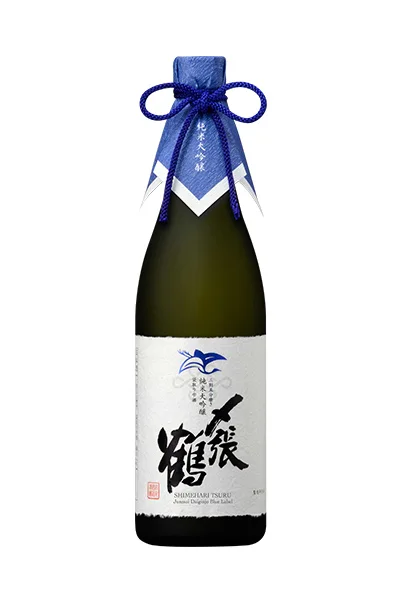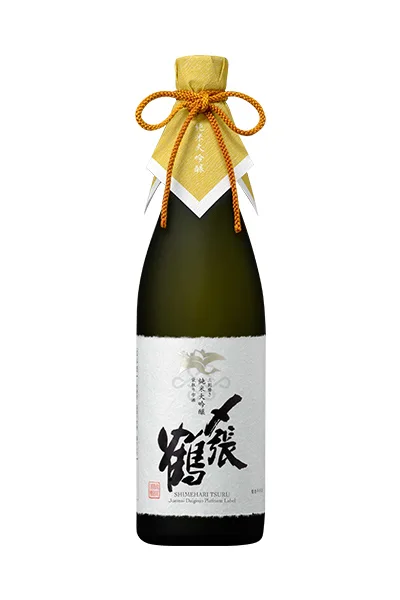
Shimeharitsuru Junmai Daiginjo PLATINUM LABEL Fukurodori Shizukuzake
〆張鶴 純米大吟醸 PLATINUM LABEL 袋取り雫酒Junmai daiginjo, Yamada Nishiki rice polished to 30%, drip-pressed from hanging bags (shizuku)
Shimeharitsuru — Miyao Shuzo, Niigata
Shimeharitsuru's finest junmai daiginjo, Platinum Label, crafted with the full skill our brewery has built up over many years.
Specifications
- Type
- Junmai Daiginjo
- Rice
- Yamada Nishiki
- Rice polishing ratio
- 30%70% of each grain polished away
- Yeast
- Not disclosed
- Alcohol
- 16%
How to read these
- Type
- The grade printed on the label. It depends on the ingredients (rice only, or with a little distilled alcohol) and on how far the rice is polished. More
- Rice
- The rice variety. Most premium sake uses varieties grown for brewing, such as Yamada Nishiki. More
- Rice polishing ratio
- How much of each grain is left after polishing. A lower number means more was milled away, which usually gives a lighter, more aromatic sake. More
- Yeast
- The yeast strain, which shapes the aroma. More
- Alcohol
- Alcohol by volume. Most sake is 15–16%; undiluted (genshu) sake is often 17–18%. More
Flavor profile Aromatic & light
Aromatic & light — fruity, floral aroma with a light body. Known in Japan as kun-shu (薫酒).
The 30% polishing ratio, daiginjo-grade brewing, free-run shizuku pressing, and the description's emphasis on floral aroma point to high aromatics. The 16% alcohol and single pasteurization give a light body with restrained sweetness, placing it in the kun quadrant.
Estimated by AI from the published specifications and the brewery's description; your impression may differ.
About
Our junmai daiginjo production began more than 30 years ago, around 1985, with the aim of creating a sake distinct from our daiginjo. By then, more than 15 years had passed since we began producing and selling Shimeharitsuru Jun, so we drew on that experience while also using the work as research into brewing. Like the daiginjo we enter in competitions, we have polished the rice thoroughly and brewed it carefully, year after year. Water: We use clear underground water (fukuryusui) from the Asahi mountain range, drawn from a well on our premises. Rice: We use high-quality Yamada Nishiki, polished in-house. We use rice polished to a rice polishing ratio of 30%, the most highly polished rice we work with. Brewing: Because the rice is so highly polished, every step demands delicacy and caution. Rice washing and soaking are done in small batches, timed to the second. Each small grain of koji is tended so that the koji mold penetrates to its center and propagates. The shubo (yeast starter) and moromi (fermentation mash) are made in much smaller tanks than usual and fermented slowly over more than 30 days under strict control. Pressing method: Fukurodori. Moromi is placed in rectangular bags that are hung, and only the sake that drips naturally from them is collected. The amount obtained from a single brew is limited, making this a precious sake. Storage: This junmai daiginjo is pasteurized only once, after pressing, then bottled as is and stored refrigerated. Its fragrant, vivid flavors are sealed in and matured.
Other sake from this brand 14
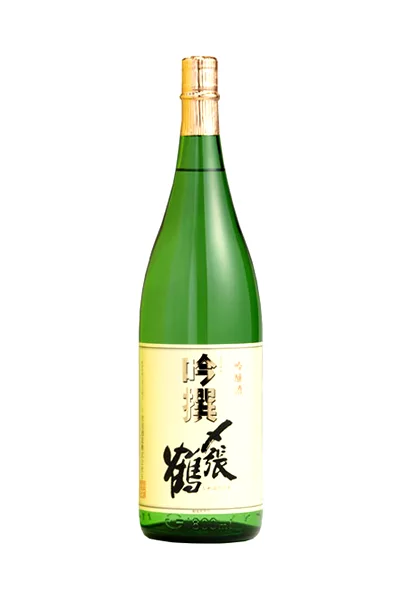
- Shimeharitsuru Ginsen〆張鶴 吟撰
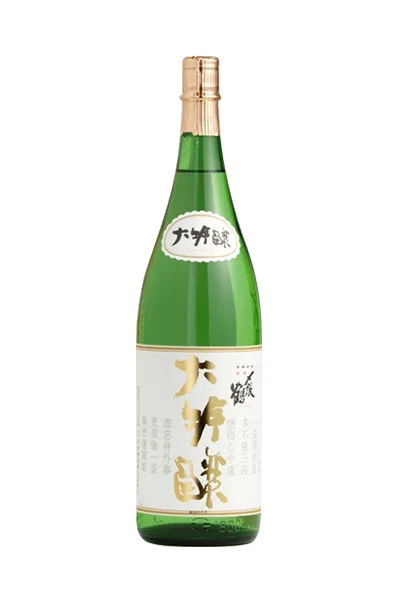
- Shimeharitsuru Daiginjo Kin Label〆張鶴 大吟醸 金ラベル
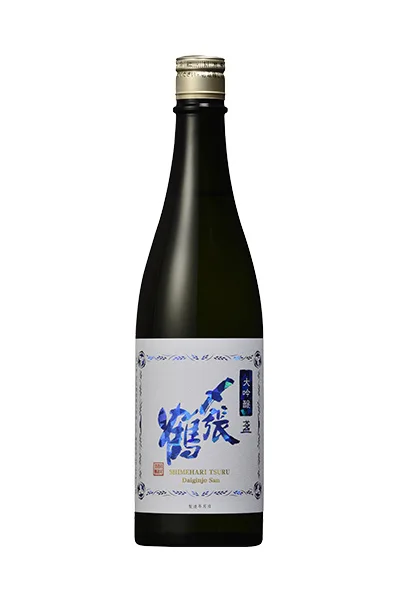
- Shimeharitsuru Daiginjo Sakazuki〆張鶴 大吟醸 盞
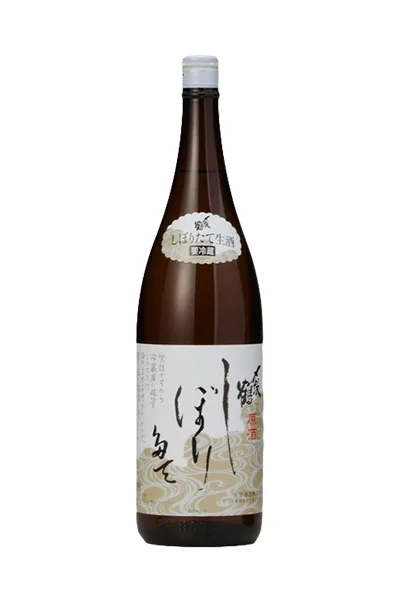
- Shimeharitsuru Shiboritate Nama Genshu〆張鶴 しぼりたて生原酒
- Shimeharitsuru Yuki〆張鶴 雪
- Shimeharitsuru Tokusen〆張鶴 特撰
- Shimeharitsuru Tsuki〆張鶴 月
- Shimeharitsuru Junmai Daiginjo BLUE LABEL Fukurodori Shizukuzake〆張鶴 純米大吟醸 BLUE LABEL 袋取り雫酒
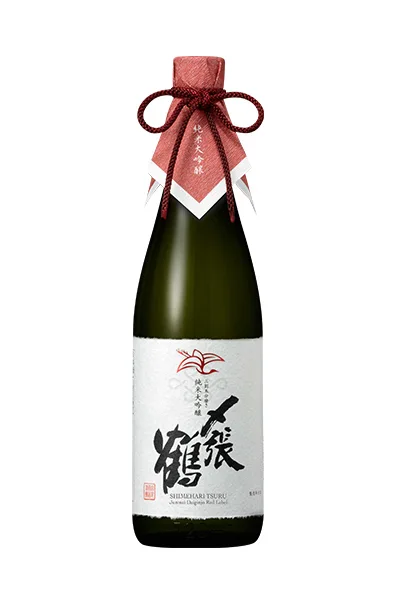
- Shimeharitsuru Junmai Daiginjo Red Label〆張鶴 純米大吟醸 RED LABEL
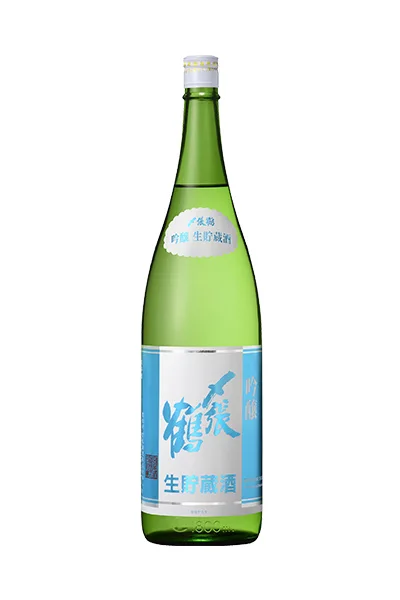
- Shimeharitsuru Ginjo Namachozo〆張鶴 吟醸生貯蔵酒
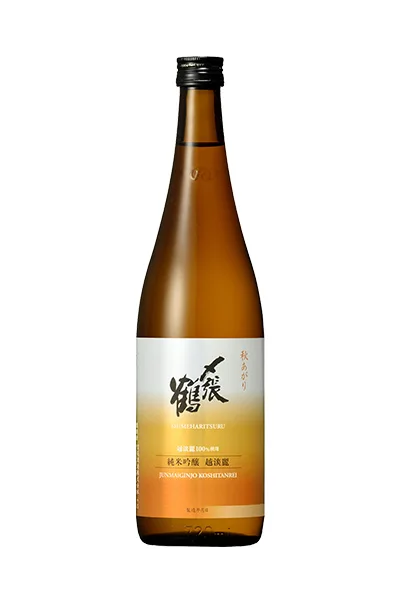
- Shimeharitsuru Junmai Ginjo Koshitanrei Akiagari〆張鶴 純米吟醸 越淡麗 秋あがり
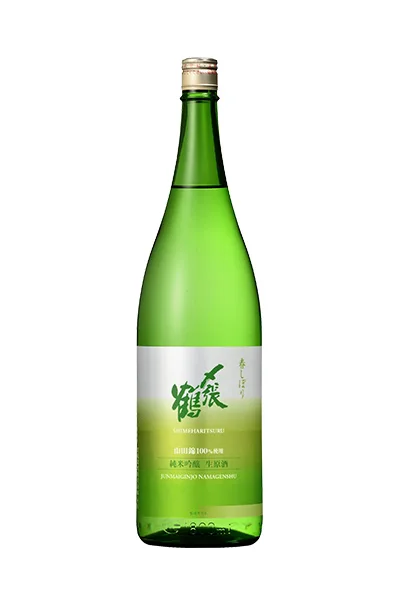
- Shimeharitsuru Junmai Ginjo Nama Genshu Haru Shibori〆張鶴 純米吟醸生原酒 春しぼり