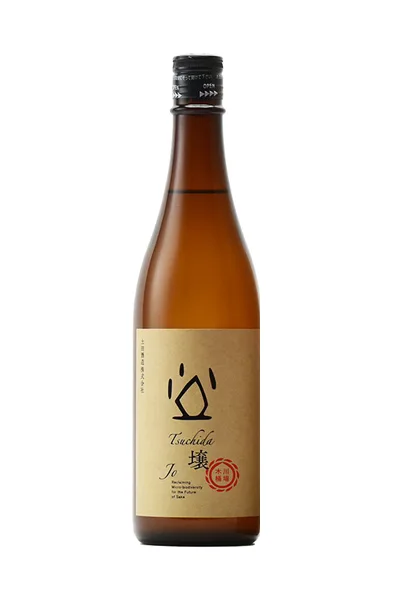
Tsuchida Jo Kioke Shikomi
Tsuchida 壌 木桶仕込みJunmai, rice polished to 90%, brewed in wooden vats
Tsuchida — Tsuchida Shuzo, Gunma
Pursuing sake brewing that relies on nature: Tsuchida Jo Kioke Shikomi
Specifications
- Type
- Junmai Shu
- Rice
- Not disclosed
- Rice polishing ratio
- 90%10% of each grain polished away
- Yeast
- Mutenka
- Alcohol
- 16%
- Sake meter value
- -12very sweet
- Acidity
- 3.7
How to read these
- Type
- The grade printed on the label. It depends on the ingredients (rice only, or with a little distilled alcohol) and on how far the rice is polished. More
- Rice
- The rice variety. Most premium sake uses varieties grown for brewing, such as Yamada Nishiki. More
- Rice polishing ratio
- How much of each grain is left after polishing. A lower number means more was milled away, which usually gives a lighter, more aromatic sake. More
- Yeast
- The yeast strain, which shapes the aroma. More
- Alcohol
- Alcohol by volume. Most sake is 15–16%; undiluted (genshu) sake is often 17–18%. More
- Sake meter value
- A sweet-to-dry scale. Plus is drier, minus is sweeter. Acidity changes how it tastes, so treat it as a rough guide. More
- Acidity
- Total acid. Higher tends to taste fuller and drier; lower tastes lighter and sweeter. More
Flavor profile Rich & umami
Rich & umami — rice-driven umami and a fuller body. Known in Japan as jun-shu (醇酒).
The junmai sake's 90% polishing ratio, high acidity of 3.7, and kimoto-style wooden-tub brewing, plus the text's "dense yet quiet" description, point to restrained aroma and a rich, umami-driven body. The SMV of -12 indicates sweetness, which the high acidity moderates to a medium level.
Estimated by AI from the published specifications and the brewery's description; your impression may differ.
About
Naturally grown rice, wooden tubs, and kimoto-style brewing (a traditional yeast-starter method) with no additives. Tsuchida Jo is brewed in wooden tubs. Jo is made from naturally grown rice grown without fertilizer or pesticides, polished to a ratio of 90%, so that very little is milled away. It is brewed with the same fully Mutenka (no additives) method as Shin Tsuchida. It is the flagship of our brewery. We brewed this Jo in wooden tubs (kioke). It is natural to wonder whether changing only the fermentation vessel could make such a difference. When you compare them, the difference is clear. The following are comments from our toji (master brewer). "Rich, yet quiet and smooth. Wooden-tub brewing clearly has more depth. Put simply, it is bitter and astringent, but there is something that cannot be expressed by those words alone." Unlike the enamel tanks in common use today, wooden tubs have tiny holes and absorb liquid, so they are said to be an environment where microorganisms tend to settle. It is thought that microorganisms absent in enamel tank fermentation are active in wooden-tub brewing (Kioke Shikomi). When people think of premium sake, many imagine a fragrant daiginjo made from highly polished sake rice. Tsuchida Jo Kioke Shikomi finds its value in the complete opposite direction. Made from naturally grown table rice polished to 90% and barely milled, it carries no Junmai or other special designation. Rather than being defined by polishing ratio or designation, could it be a sake of new value? You may wish to offer this new kind of sake as a gift or for a special occasion.
Other sake from this brand 37
- GI Shin Tsuchida Yuki HotakaGI シン・ツチダ 雪ほたか
- GI Shin Tsuchida KoshihikariGI シン・ツチダ コシヒカリ
- Oze no Mokudo 2024-1尾瀬の木道2024-1
- Kan Tsuchidaカン・ツチダ
- Kudoi! Shin Tsuchida (Kenkyu Jozo data.32)クドい!シン・ツチダ(研究醸造 data.32)
- Kenkyu Jozo 18研究醸造18
- Kenkyu Jozo 19研究醸造19
- Tsuchida Kenkyu Jozo 20研究醸造20
- Kenkyu Jozo 21研究醸造21
- Kenkyu Jozo 22研究醸造22
- Kenkyu Jozo 23研究醸造23
- Kenkyu Jozo Data15研究醸造 Data15