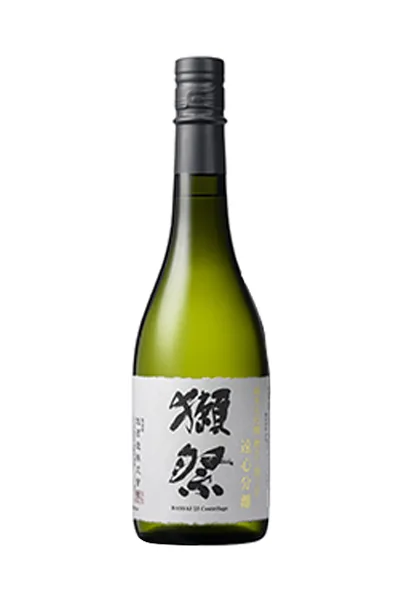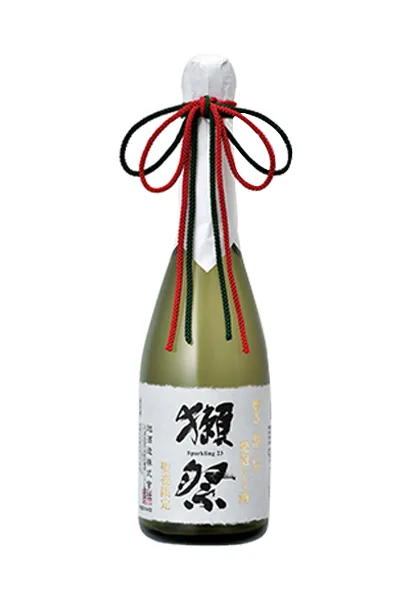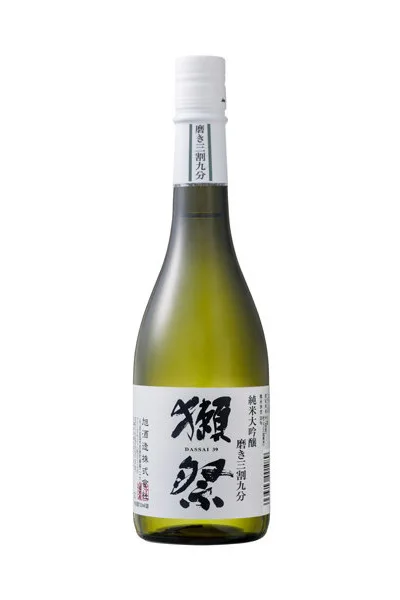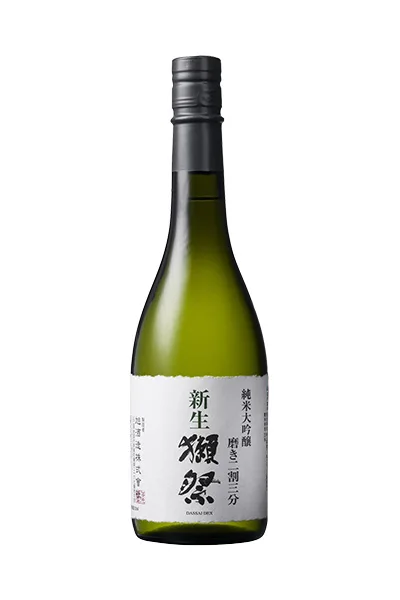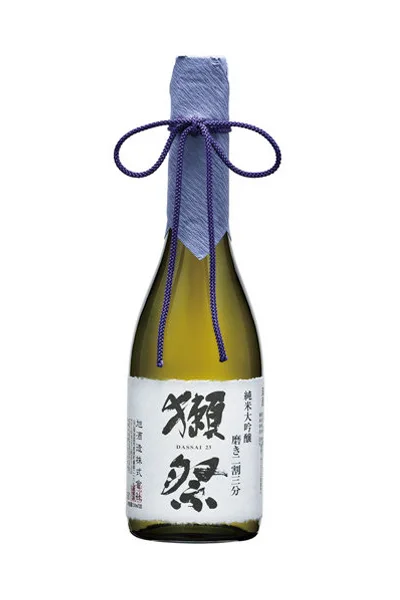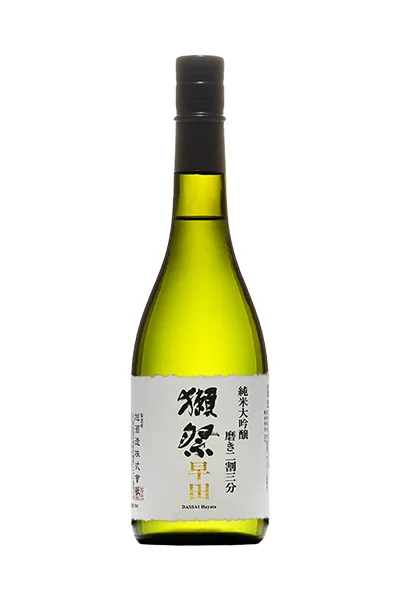
Dassai Hayata Junmai Daiginjo Migaki Niwari Sanbu
獺祭 早田 純米大吟醸 磨き二割三分Junmai daiginjo, Yamada Nishiki rice polished to 23%, unfiltered, unpasteurized and undiluted (muroka nama genshu)
Made to keep the fresh flavor of freshly pressed sake.
Specifications
- Type
- Junmai Daiginjo
- Rice
- Yamada Nishiki
- Rice polishing ratio
- 23%77% of each grain polished away
- Yeast
- Not disclosed
- Alcohol
- 16–17%
- Sake meter value
- +5dry
- Acidity
- 1.5
How to read these
- Type
- The grade printed on the label. It depends on the ingredients (rice only, or with a little distilled alcohol) and on how far the rice is polished. More
- Rice
- The rice variety. Most premium sake uses varieties grown for brewing, such as Yamada Nishiki. More
- Rice polishing ratio
- How much of each grain is left after polishing. A lower number means more was milled away, which usually gives a lighter, more aromatic sake. More
- Yeast
- The yeast strain, which shapes the aroma. More
- Alcohol
- Alcohol by volume. Most sake is 15–16%; undiluted (genshu) sake is often 17–18%. More
- Sake meter value
- A sweet-to-dry scale. Plus is drier, minus is sweeter. Acidity changes how it tastes, so treat it as a rough guide. More
- Acidity
- Total acid. Higher tends to taste fuller and drier; lower tastes lighter and sweeter. More
Flavor profile Aromatic & light
Aromatic & light — fruity, floral aroma with a light body. Known in Japan as kun-shu (薫酒).
At 23% polishing, this junmai daiginjo should show a fragrant aroma, while SMV +5 and acidity 1.5 point to a dry, light palate. The nama freshness and genshu strength add a modest amount of body without making it heavy.
Estimated by AI from the published specifications and the brewery's description; your impression may differ.
About
Low-temperature pasteurization of sake deactivates enzymes and yeast, which enhances the sake's shelf life. This technique was known among toji (master brewers) from the late Muromachi period as 'nishu' (煮酒, boiled sake). By further refining this technique and developing what is called hiate (火当て, heat application), sake became an alcoholic beverage that, unusually among the world's drinks, uses no preservatives at all. In addition, Asahi Shuzo accepts higher costs to bottle the sake at 5°C or below. After the sake is heat-sterilized with a hot-water shower, it is chilled rapidly, minimizing as much as possible the damage caused by heat application. However, no matter how carefully heat sterilization is performed, changes in the sake's quality caused by applying heat were unavoidable. By adding carbon dioxide converted into microbubbles (*1) to the sake, it became possible to achieve equivalent results in a short time, at 65°C for 15 seconds or less. *1 Patent 2013-008455 (applicants: Nihon Medical University / Asahi Shuzo Co., Ltd.) This method was developed through joint research between Asahi Shuzo and the late Professor Yasuyoshi Hayata of Meiji University. After Professor Hayata passed away from an unexpected illness, the research was entrusted to his former student, Assistant Professor Fumiyuki Kobayashi of the Nihon Medical University group, and continued. The method was commercialized in 2016. We extend our heartfelt respect and gratitude for Professor Hayata's achievements. The name of this sake, 'Dassai Hayata Junmai Daiginjo Migaki Niwari Sanbu,' was chosen to honor Professor Hayata's achievements. Dedicated to the late Professor Yasuyoshi Hayata. Dassai, Brewery Owner: Hiroshi Sakurai
Seasonal release, available March through November.
Other sake from this brand 19
- Kōkyōkyoku Dassai Migaki交響曲 獺祭 ~磨~
- Shinsei Dassai Junmai Daiginjo 45新生獺祭 純米大吟醸45
- Dassai Junmai Daiginjo Hana Niou純米大吟醸 獺祭 花匂ふ
- Junmai Daiginjo Migaki Niwari Sanbu Dassai Bisui純米大吟醸 磨き二割三分 獺祭美酔
- Dassai Migaki Niwari Sanbu Enshin Bunri獺祭 磨き二割三分 遠心分離
- Dassai Junmai Daiginjo Sparkling Nigori Migaki Niwari Sanbu Seiya Gentei獺祭 純米大吟醸 発泡にごり酒 磨き二割三分 聖夜限定
- Dassai Junmai Daiginjo Migaki Sanwari Kyubu獺祭 純米大吟醸 磨き三割九分
- Shinsei Dassai Junmai Daiginjo Migaki Niwari Sanbu新生獺祭 純米大吟醸 磨き二割三分
- Dassai Junmai Daiginjo Sparkling 45獺祭 純米大吟醸 スパークリング45
- Dassai Junmai Daiginjo Migaki Sanwari Kyubu Kanzukuri Soufune獺祭 純米大吟醸 磨き三割九分 寒造早槽
- Dassai Junmai Daiginjo Migaki Niwari Sanbu Enshin Bunri獺祭 純米大吟醸 磨き二割三分 遠心分離
- Dassai Junmai Daiginjo Migaki Niwari Sanbu獺祭 純米大吟醸 磨き二割三分