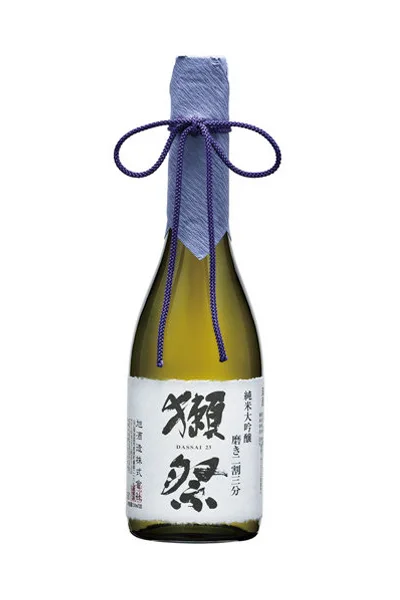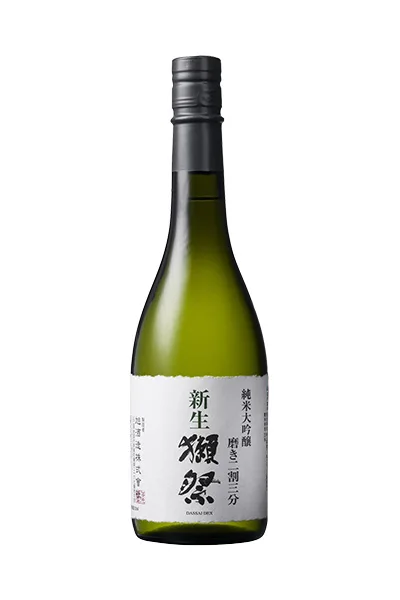
Shinsei Dassai Junmai Daiginjo Migaki Niwari Sanbu
新生獺祭 純米大吟醸 磨き二割三分Junmai daiginjo, Yamada Nishiki rice polished to 23%, unpasteurized (nama)
Shinsei Dassai, a Junmai Daiginjo crafted with a focus on the Dassai Exosome
Specifications
- Type
- Junmai Daiginjo
- Rice
- Yamada Nishiki
- Rice polishing ratio
- 23%77% of each grain polished away
- Yeast
- Not disclosed
- Alcohol
- 15–16%
- Sake meter value
- +4dry
- Acidity
- 1.1
How to read these
- Type
- The grade printed on the label. It depends on the ingredients (rice only, or with a little distilled alcohol) and on how far the rice is polished. More
- Rice
- The rice variety. Most premium sake uses varieties grown for brewing, such as Yamada Nishiki. More
- Rice polishing ratio
- How much of each grain is left after polishing. A lower number means more was milled away, which usually gives a lighter, more aromatic sake. More
- Yeast
- The yeast strain, which shapes the aroma. More
- Alcohol
- Alcohol by volume. Most sake is 15–16%; undiluted (genshu) sake is often 17–18%. More
- Sake meter value
- A sweet-to-dry scale. Plus is drier, minus is sweeter. Acidity changes how it tastes, so treat it as a rough guide. More
- Acidity
- Total acid. Higher tends to taste fuller and drier; lower tastes lighter and sweeter. More
Flavor profile Aromatic & light
Aromatic & light — fruity, floral aroma with a light body. Known in Japan as kun-shu (薫酒).
A 23% polished junmai daiginjo made with Yamada Nishiki and sold as nama suggests a fragrant, fresh profile. SMV +4 with low acidity (1.1) points to a gentle, softly rounded dryness, placing it in the aromatic and light kun category.
Estimated by AI from the published specifications and the brewery's description; your impression may differ.
About
Since ancient times, sake has been called the best of a hundred medicines. The complex fermentation process of sake produces many substances that are beneficial to people. Unfortunately, however, some of these valuable substances are lost during fermentation and do not remain in the finished product. The 'Dassai Exosome,' discovered during Dassai's fermentation process, is one such substance. Shinsei Dassai was created with a focus on the 'Dassai Exosome,' a substance formed during Dassai's fermentation process. In conventional sake brewing, the 'Dassai Exosome' is lost. This sake is made by extracting the 'Dassai Exosome' and adding it back in. It is a product in which Dassai has pursued qualities beyond flavor alone.
Other sake from this brand 19
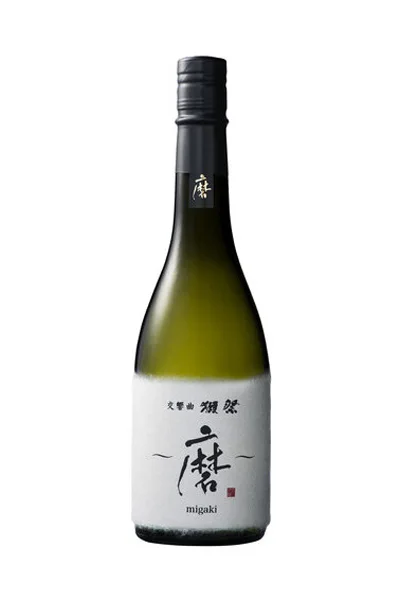
- Kōkyōkyoku Dassai Migaki交響曲 獺祭 ~磨~
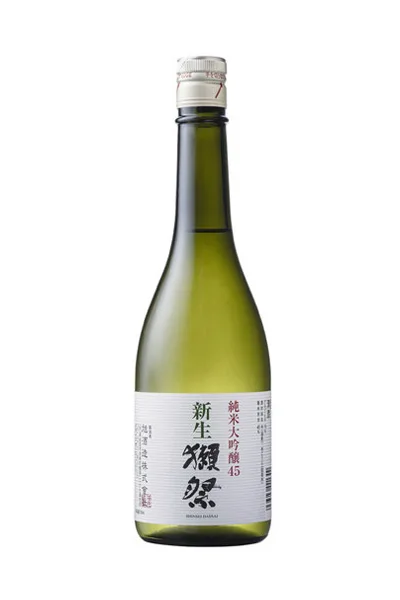
- Shinsei Dassai Junmai Daiginjo 45新生獺祭 純米大吟醸45
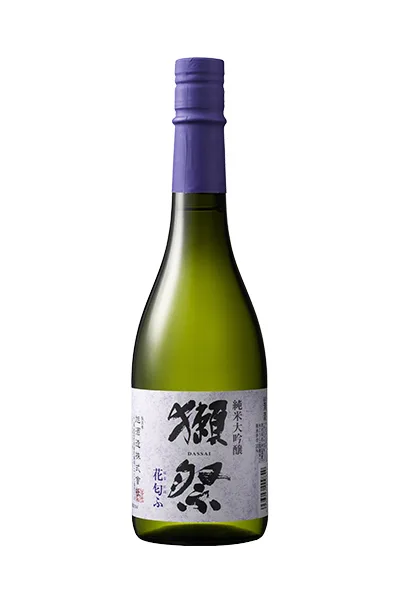
- Dassai Junmai Daiginjo Hana Niou純米大吟醸 獺祭 花匂ふ
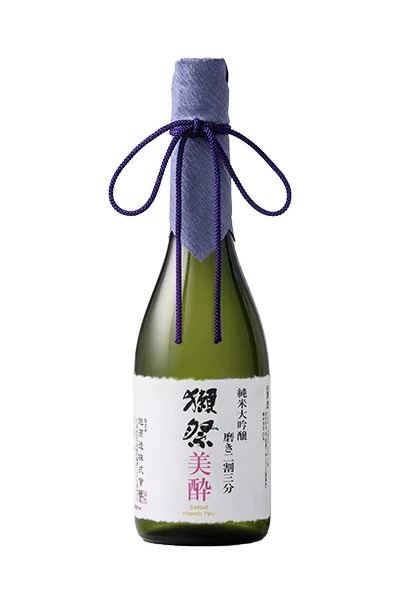
- Junmai Daiginjo Migaki Niwari Sanbu Dassai Bisui純米大吟醸 磨き二割三分 獺祭美酔
- Dassai Migaki Niwari Sanbu Enshin Bunri獺祭 磨き二割三分 遠心分離
- Dassai Junmai Daiginjo Sparkling Nigori Migaki Niwari Sanbu Seiya Gentei獺祭 純米大吟醸 発泡にごり酒 磨き二割三分 聖夜限定
- Dassai Junmai Daiginjo Migaki Sanwari Kyubu獺祭 純米大吟醸 磨き三割九分
- Dassai Junmai Daiginjo Sparkling 45獺祭 純米大吟醸 スパークリング45
- Dassai Junmai Daiginjo Migaki Sanwari Kyubu Kanzukuri Soufune獺祭 純米大吟醸 磨き三割九分 寒造早槽
- Dassai Junmai Daiginjo Migaki Niwari Sanbu Enshin Bunri獺祭 純米大吟醸 磨き二割三分 遠心分離
- Dassai Junmai Daiginjo Migaki Niwari Sanbu獺祭 純米大吟醸 磨き二割三分
- Dassai Junmai Daiginjo Migaki Niwari Sanbu Hanabie Sake獺祭 純米大吟醸 磨き二割三分 花冷え酒