

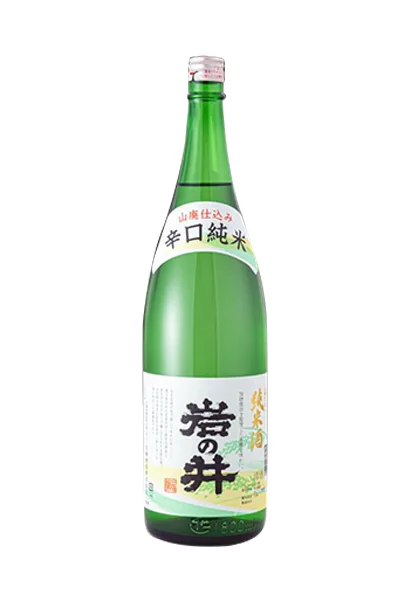
Iwanoi Yamahai Dry Junmai
岩の井 山廃辛口純米Junmai, rice polished to 70%, yamahai starter, dry
Iwanoi — Iwase Shuzo, Chiba
Traditional yamahai starter brings out the rich umami of the rice in this dry junmai sake.
Specifications
- Type
- Other
- Rice
- Not disclosed
- Rice polishing ratio
- 70%30% of each grain polished away
- Yeast
- Not disclosed
- Alcohol
- 15%
How to read these
- Type
- The grade printed on the label. It depends on the ingredients (rice only, or with a little distilled alcohol) and on how far the rice is polished. More
- Rice
- The rice variety. Most premium sake uses varieties grown for brewing, such as Yamada Nishiki. More
- Rice polishing ratio
- How much of each grain is left after polishing. A lower number means more was milled away, which usually gives a lighter, more aromatic sake. More
- Yeast
- The yeast strain, which shapes the aroma. More
- Alcohol
- Alcohol by volume. Most sake is 15–16%; undiluted (genshu) sake is often 17–18%. More
Flavor profile Rich & umami
Rich & umami — rice-driven umami and a fuller body. Known in Japan as jun-shu (醇酒).
The yamahai junmai at 70% polishing, with its description of a dry, umami-rich body and sharp finish, points to restrained aroma, a full body and low sweetness.
Estimated by AI from the published specifications and the brewery's description; your impression may differ.
About
When warmed (kan), it has a full, rounded body and a clean finish. It pairs well with a wide range of cuisines, including Japanese, Western, and Chinese dishes. (Serve chilled to warmed.) It also pairs well with cheese. What is yamahai shubo? Yamahai shubo (yamahai starter) is an evolved form of kimoto (traditional yeast-starter method) developed in the Meiji era. It eliminates yamaoroshi (the labor-intensive grinding step in kimoto production), which is the most demanding part of the process. It is named yamahai, short for yamaoroshi haishi (abolition of yamaoroshi). Today, the sokujo moto method (quick yeast-starter method), which adds lactic acid bacteria directly, has become mainstream. Yamahai shubo is a traditional method that is used by only a few breweries in Japan, including Iwanoi. As with kimoto, it cultivates naturally occurring lactic acid bacteria. Compared with sokujo moto, this results in a higher amino acid content, a firmer body, and a richer, fuller flavor. The aroma also tends to be deeper and more fragrant.
Other sake from this brand 19
- Iwanoi Junmai Ginjo Genshu岩の井 純米吟醸 原酒
- Iwanoi Yamahai Junmai Ginjo Ichidan Shikomi岩の井 山廃純米吟醸 一段仕込
- Iwanoi Yumeji岩の井 夢二
- Iwanoi Ginkara岩の井 吟辛
- Iwanoi Daiginjo岩の井 大吟醸
- Iwanoi Josen岩の井 上撰
- Iwanoi Gin no Mai岩の井 吟の舞
- Iwanoi Yamahai Junmai Daiginjo岩の井 山廃純米大吟醸
- Iwanoi Hojo no Sato岩の井 豊穣の里
- Iwanoi Omachi Junmai Daiginjo岩の井 雄町 純米大吟醸
- Iwanoi Yamahai Namazake岩の井 山廃生酒
- Iwanoi Tsuki no Sabaku岩の井 月の沙漠