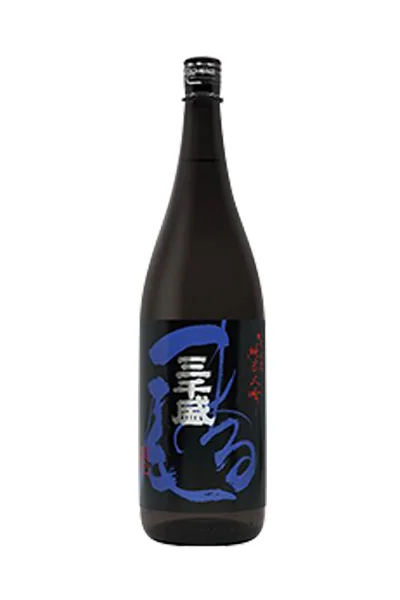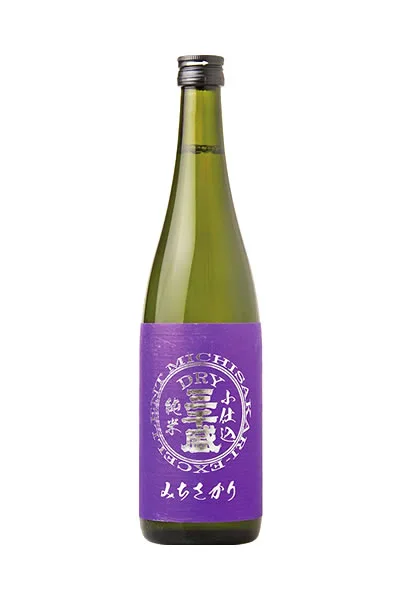
Michisakari Koshikomi Junmai
三千盛 小仕込純米Junmai daiginjo, Yamada Nishiki rice polished to 40%, small-batch brewing (koshikomi)
Michisakari — Michisakari, Gifu
The ultimate in dryness: a special junmai daiginjo in pursuit of a supremely crisp finish
Specifications
- Type
- Junmai Daiginjo
- Rice
- Yamada Nishiki
- Rice polishing ratio
- 40%60% of each grain polished away
- Yeast
- Not disclosed
- Alcohol
- 15–16%
- Sake meter value
- +18very dry
- Acidity
- 2.2
How to read these
- Type
- The grade printed on the label. It depends on the ingredients (rice only, or with a little distilled alcohol) and on how far the rice is polished. More
- Rice
- The rice variety. Most premium sake uses varieties grown for brewing, such as Yamada Nishiki. More
- Rice polishing ratio
- How much of each grain is left after polishing. A lower number means more was milled away, which usually gives a lighter, more aromatic sake. More
- Yeast
- The yeast strain, which shapes the aroma. More
- Alcohol
- Alcohol by volume. Most sake is 15–16%; undiluted (genshu) sake is often 17–18%. More
- Sake meter value
- A sweet-to-dry scale. Plus is drier, minus is sweeter. Acidity changes how it tastes, so treat it as a rough guide. More
- Acidity
- Total acid. Higher tends to taste fuller and drier; lower tastes lighter and sweeter. More
Flavor profile Aromatic & light
Aromatic & light — fruity, floral aroma with a light body. Known in Japan as kun-shu (薫酒).
The SMV of +18, acidity of 2.2 and 40% polishing point to a very dry, sharp profile, which matches the karakuchi and kire described in the text. The gentle ginjo aroma and light, crisp body place it in the kun (aromatic and light) quadrant.
Estimated by AI from the published specifications and the brewery's description; your impression may differ.
About
Koshikomi Junmai is the top-tier sake of the Michisakari brand. It is made with Hyogo Prefecture-grown Yamada Nishiki polished to a rice polishing ratio of 40%, and Akita Prefecture-grown Miyama Nishiki polished to a rice polishing ratio of 30%. It has a refined flavor and the honed, crisp finish (kire, a clean finish) characteristic of a brewery devoted to dryness, and its umami expands with every sip. A bottle that dry sake lovers will find irresistible, it pairs excellently not only with Japanese cuisine but also with Western dishes. Serving chilled or warmed to lukewarm (nurukan) is recommended.
Other sake from this brand 14
- Michisakari Meijo三千盛 銘醸
- Michisakari Chotoku三千盛 超特
- Michisakari Yujo三千盛 悠醸
- Michisakari Honjozo三千盛 本醸
- Michisakari Chotoku Genshu三千盛 超特原酒
- Michisakari Hojo三千盛 朋醸
- Michisakari Junmai Daiginjo三千盛 純米大吟醸
- Michisakari Tokujo三千盛 特醸
- Michisakari Junmai Daiginjo Maruo三千盛 純米大吟醸 まる尾
- Michisakari Shiboritate Namazake三千盛 しぼりたて生酒
- Michisakari Nigorizake三千盛 にごり酒
- Michisakari Shiboritate Junmai三千盛 しぼりたて純米