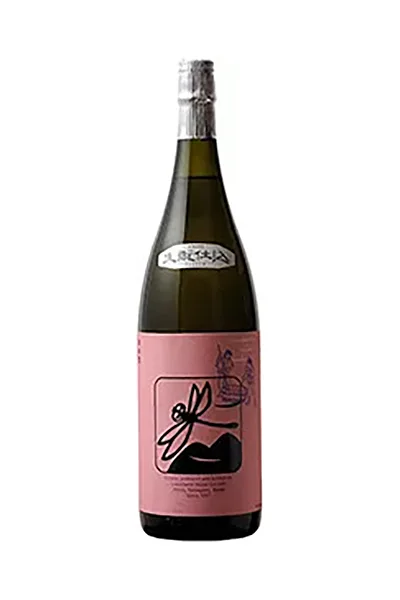
Izumibashi Momoiro Kuro Tonbo
いづみ橋 桃色 黒とんぼJunmai, rice polished to 60%, kimoto starter
Izumibashi — Izumibashi Shuzo, Kanagawa
Self-grown sake rice, patient kimoto brewing, and two years of aging: this is the Kurotombo series from Izumibashi Sake Brewery.
Specifications
- Type
- Junmai Shu
- Rice
- Not disclosed
- Rice polishing ratio
- 60%40% of each grain polished away
- Yeast
- Not disclosed
- Alcohol
- 16%
- Sake meter value
- +7very dry
- Acidity
- 1.6
How to read these
- Type
- The grade printed on the label. It depends on the ingredients (rice only, or with a little distilled alcohol) and on how far the rice is polished. More
- Rice
- The rice variety. Most premium sake uses varieties grown for brewing, such as Yamada Nishiki. More
- Rice polishing ratio
- How much of each grain is left after polishing. A lower number means more was milled away, which usually gives a lighter, more aromatic sake. More
- Yeast
- The yeast strain, which shapes the aroma. More
- Alcohol
- Alcohol by volume. Most sake is 15–16%; undiluted (genshu) sake is often 17–18%. More
- Sake meter value
- A sweet-to-dry scale. Plus is drier, minus is sweeter. Acidity changes how it tastes, so treat it as a rough guide. More
- Acidity
- Total acid. Higher tends to taste fuller and drier; lower tastes lighter and sweeter. More
Flavor profile Rich & umami
Rich & umami — rice-driven umami and a fuller body. Known in Japan as jun-shu (醇酒).
Kimoto junmai with 60% polishing, SMV +7 and acidity 1.6, along with the text's clean umami and two years of aging, suggests restrained aroma, a full umami-rich body and a dry profile.
Estimated by AI from the published specifications and the brewery's description; your impression may differ.
About
Momoiro Kurotombo is a junmai sake brewed by the kimoto method (traditional yeast-starter method) using Shinriki rice grown locally. The Shinriki seed was obtained from Kumamoto. Ikegami, chairman of the Sagami Sake Rice Research Group, cultivates it in Zama City, Kanagawa Prefecture. Shinriki sake offers a clean umami and the depth that comes with aging, and it pairs especially well with seafood dashi. We think it is most satisfying when enjoyed as warmed sake at around 50°C.
Other sake from this brand 14
- Izumibashi Natsu Yago Blueいづみ橋 夏ヤゴ ブルー
- Izumibashi Natsu Yago Pinkいづみ橋 夏ヤゴ ピンク
- Izumibashi Junmai Daiginjoいづみ橋 純米大吟醸
- Izumibashi Megumi Red Label Junmai Muroka Genshuいづみ橋 恵 赤ラベル 純米 無濾過原酒
- Izumibashi Megumi Ao Label Muroka Junmai Ginjoいづみ橋 恵 青ラベル 無濾過 純米吟醸
- Izumibashi Kimoto Junmai Kuro Tonboいづみ橋 生酛純米 黒とんぼ
- Izumibashi Tokubetsu Junmaiいづみ橋 特別純米酒
- Izumibashi Junmai Ginjo Omachiいづみ橋 純米吟醸酒 雄町
- Izumibashi Tokusen Daiginjoいづみ橋 特撰 大吟醸
- Izumibashi Daiginjoいづみ橋 大吟醸
- Izumibashi Junmai Ginjoいづみ橋 純米吟醸酒
- Izumibashi Ginjoいづみ橋 吟醸