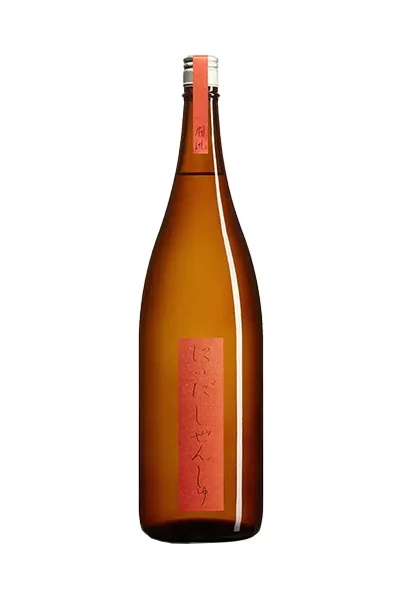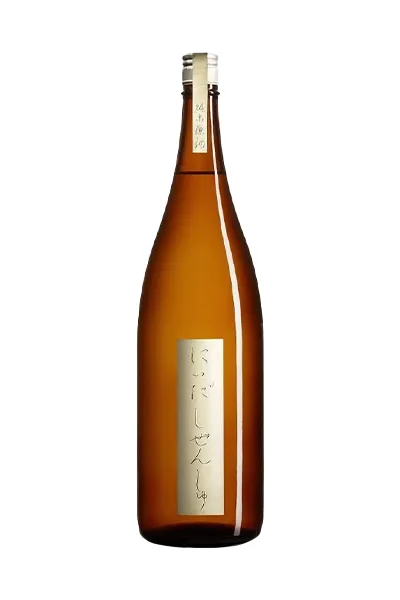
Niida Shizenshu Junmai Genshu
にいだしぜんしゅ 純米原酒Junmai, rice polished to 80%, undiluted (genshu)
Niida Shizenshu — Niida Honke, Fukushima
Amber and velvety, gentle on the body, with a robust flavor: the junmai genshu at the heart of Niida-Honke's brewing.
Specifications
- Type
- Junmai Shu
- Rice
- Not disclosed
- Rice polishing ratio
- 80%20% of each grain polished away
- Yeast
- Not disclosed
- Alcohol
- 16%
How to read these
- Type
- The grade printed on the label. It depends on the ingredients (rice only, or with a little distilled alcohol) and on how far the rice is polished. More
- Rice
- The rice variety. Most premium sake uses varieties grown for brewing, such as Yamada Nishiki. More
- Rice polishing ratio
- How much of each grain is left after polishing. A lower number means more was milled away, which usually gives a lighter, more aromatic sake. More
- Yeast
- The yeast strain, which shapes the aroma. More
- Alcohol
- Alcohol by volume. Most sake is 15–16%; undiluted (genshu) sake is often 17–18%. More
Flavor profile Rich & umami
Rich & umami — rice-driven umami and a fuller body. Known in Japan as jun-shu (醇酒).
Kimoto brewing and four-stage kumidashi bring out rice umami and sweetness, and the 16% genshu strength points to a full, rich body. Aroma stays restrained, as expected for a non-ginjo junmai polished to 80%.
Estimated by AI from the published specifications and the brewery's description; your impression may differ.
About
Shizenshu Junmai Genshu Kimoto brewing (traditional yeast-starter method), Mutenka (no added yeast), relying on brewery-resident yeast (kuratsuki kobo) Since its release in 1967 (Showa 42), it has been enjoyed as a natural sake that is delicious and good for the body. Shizenshu is brewed using the brewery's own kumidashi yondan jikomi (four-stage brewing method), and it retains an appeal that today's sake has lost. Each year, drawing on more than twenty years of data analysis and close examination of the character of the harvested rice, it is brewed in dialogue with the wisdom of past brewers. The four-stage brewing draws out the maximum umami and sweetness of the rice, while the acidity characteristic of kimoto gives the sake's outline a firm structure. Amber in color and smooth, with a gentle yet robust flavor, this junmai genshu is the origin of Niida-Honke's brewing.
Other sake from this brand 12
- Niida Shizenshu Nigoriにいだしぜんしゅ にごり酒
- Niida Shizenshu Junmai Ginjoにいだしぜんしゅ 純米吟醸
- Niida Shizenshu Kan-atsuraeにいだしぜんしゅ 燗誂
- Niida Shizenshu Hyakunen Kijoshu自然酒(福島県) 百年貴醸酒
- Niida Shizenshu自然酒(福島県) にいだしぜんしゅ
- Niida Shizenshu (Fukushima) Tokusen自然酒(福島県) 特撰
- Niida Shizenshu (Fukushima) Bangai Bokutsu Komami自然酒(福島県) 番外 朴訥米味
- Shizenshu (Fukushima) Fune-guchi Jikagumi Nama Genshu自然酒(福島県) 槽口直汲み 生原酒
- Shizenshu (Fukushima) Junmai Genshu Kuratsuki Kobo Shikomi Nama自然酒(福島県) 純米原酒 蔵付き酵母仕込 生
- Niida Shizenshu (Fukushima) Nama Shibori自然酒(福島県) 生しぼり
- Niida Shizenshu (Fukushima) Bangai Kame no O自然酒(福島県) 番外 亀の尾
- Shizenshu (Fukushima) Bangai Kanjuku Makuwauri-teki自然酒(福島県) 番外 完熟甜瓜的